Why Fat Distribution, Not Just Total Weight, Shapes Underwriting
Central obesity — excess fat specifically stored around the abdomen — is the clinical concept underwriters are ultimately trying to capture whenever waist circumference, WHR, or WHtR-adjacent measurements appear in a life, health, or critical illness underwriting guideline.
For anyone who has just run their own numbers through this site's waist ratio calculator, it's worth being clear upfront about the practical distinction between an educational health calculator and an actual insurance underwriting process: this calculator reports general reference categories intended to help you understand a well-established area of health research, while an actual insurer's guidelines — including which measurements they use, which thresholds apply, and how those measurements are weighted against other biometric data — are set independently by each company and are not something any third-party calculator can predict with certainty. The value of understanding the underlying science, covered here and in our companion educational guide, is in giving you an informed, realistic sense of what an underwriter is likely to be looking at, not a guaranteed preview of any specific insurer's rate decision.
As our companion guide on WHR and WHtR explains in depth, two people with identical bodyweight and identical BMI can carry very different cardiometabolic risk depending on where their fat is stored. Insurance actuaries — who build pricing models directly from long-term population health data — have absorbed this same research finding over the past two decades, which is why waist-based measurements have gradually become a standard addition to many insurers' underwriting toolkits, layered on top of the traditional height-and-weight build chart discussed in our companion article on how BMI affects insurance.
It's worth understanding roughly how this shift happened, since it explains why underwriting practices still vary so much between insurers today rather than having settled into one universal global standard. Actuarial science moves cautiously and incrementally: a new risk factor typically needs to appear consistently across multiple large, independent population studies, over many years, before insurers incorporate it into pricing models with confidence. Waist-based risk factors crossed that evidentiary threshold at different times in different countries and insurance markets, which is precisely why some insurers today have fully integrated waist circumference into their build charts while others still rely primarily on the older height-and-weight model. Neither approach is inherently "wrong" — they simply reflect different stages of a gradual, ongoing shift in underwriting methodology that is still very much in progress across the global insurance industry.
Metabolic Syndrome: The Underwriting Concept Behind the Headlines
Central obesity rarely travels alone. Clinically, it's one of five components of a well-established risk cluster called metabolic syndrome, diagnosed when an individual has three or more of the following: elevated waist circumference, elevated blood pressure, elevated fasting blood sugar, elevated triglycerides, and low HDL ("good") cholesterol.
| Metabolic Syndrome Component | Typical Screening Threshold |
|---|---|
| Waist Circumference | Population-specific (see below) |
| Blood Pressure | 130/85 mmHg or higher |
| Fasting Blood Sugar | 100 mg/dL or higher |
| Triglycerides | 150 mg/dL or higher |
| HDL Cholesterol | Below 40 mg/dL (men) / 50 mg/dL (women) |
Metabolic syndrome carries a well-documented, substantially elevated risk of future cardiovascular disease and type 2 diabetes compared to having any single risk factor in isolation. This is directly relevant to underwriting because it explains why insurers rarely price waist circumference as a standalone number — it's most meaningful, and most heavily weighted, when it appears alongside other elevated markers from the same paramedical exam.
For an applicant reviewing their own paramedical exam results, or preparing for one, this framework offers a genuinely useful way to interpret the overall picture rather than fixating on any single number. An elevated waist measurement paired with entirely normal blood pressure, blood sugar, and cholesterol tells a meaningfully different risk story than the same waist measurement paired with two or three additional elevated markers — and most sophisticated underwriting guidelines are built to reflect exactly that difference, rather than penalizing waist circumference as an isolated, standalone factor.
Waist Measurement at a Paramedical Exam
As covered in more depth in our companion guide on BMI and insurance, life insurance coverage above a given sum-assured threshold typically triggers a paramedical exam. An increasing number of insurers now include waist circumference in that exam alongside height, weight, and blood pressure — specifically because it adds meaningful predictive information about metabolic syndrome risk that height and weight alone cannot capture.
What this means in practice: an applicant with a favorable BMI but an elevated waist measurement is not automatically treated the same as an applicant with the same BMI and a smaller waist. Where an insurer's guidelines incorporate waist circumference, it functions as an independent input into the overall rating-class decision, not merely a restatement of the BMI number.
Population-Specific Thresholds in Insurance Underwriting
As explored in depth in our companion educational guide, several international health bodies have adopted lower waist circumference action points for South Asian, Chinese, and Japanese populations, reflecting research showing elevated cardiometabolic risk at smaller waist measurements in these groups compared to general Western reference populations.
💡 Where Your Calculator Results Fit In
Insurers operating in India, China, Japan, Singapore, and other Asian markets frequently build their own underwriting guidelines around regional research and population data, rather than importing Western reference build charts unchanged. This is precisely why this calculator's companion guide dedicates a full section to population-specific waist thresholds — the same regional research that informs public health guidance also, in many cases, informs how local insurers assess risk.
Critical Illness Insurance & Central Obesity
Critical illness insurance, which pays a lump sum on diagnosis of conditions like heart attack, stroke, or type 2 diabetes-related complications, is particularly sensitive to central obesity and metabolic syndrome risk factors, since these conditions sit at the direct end of the causal pathway these risk markers are trying to predict. Given how popular critical illness cover is in markets like the UK, Canada, China, and much of Southeast Asia, waist-based risk assessment has become an increasingly standard part of underwriting this specific product category.
Disability and income-protection insurance follows a related, though slightly different, logic. Beyond cardiovascular and metabolic disease risk, central obesity has also been associated in research with an elevated likelihood of certain musculoskeletal conditions and reduced physical work capacity over time, both of which are directly relevant to an insurer assessing long-term disability risk. This is part of why waist-based measurements, where incorporated, sometimes influence disability and income-protection underwriting even for applicants whose primary coverage need is unrelated to cardiovascular health specifically.
A Worldwide Tour: Ethnicity-Specific Waist Thresholds in Real Clinical Guidance
Waist-based underwriting is unusual among the biometrics covered across our companion insurance articles, because the regional variation here has a genuine, published clinical basis rather than just differing market practices — the actual threshold numbers change by design, not by accident.
The IDF's 2006 Ethnicity-Specific Consensus
The International Diabetes Federation's 2006 worldwide consensus definition of metabolic syndrome deliberately set different waist circumference thresholds by ethnicity, reflecting research showing that visceral fat risk accumulates differently across populations at the same overall waist size. The IDF's published reference points include roughly 94 cm (men) and 80 cm (women) for Europid populations, versus roughly 90 cm (men) and 80 cm (women) for South Asian and Chinese populations. This is the same clinical framework our companion educational guide's population-threshold table draws on.
Japan's Own Domestic Standard: An Outlier Even Within Asia
Japan presents a genuinely distinctive case. Its own national metabolic syndrome screening program (part of the mandatory annual "tokutei kenshin" health checks) has used domestic waist circumference thresholds of roughly 85 cm for men and 90 cm for women — notably setting the women's threshold higher than the men's, which diverges from both the IDF's own Japan-specific recommendation and from most other countries' standards, and has been a point of considerable debate within Japan's own medical and public health community.
What This Means for Insurance Underwriting
Insurers in markets that have incorporated IDF-aligned or domestically adjusted waist thresholds — including parts of India, China, and Japan — are applying a genuinely different, clinically grounded bar than a Western build chart using the roughly 94 cm/80 cm Europid reference point. Two applicants with an identical waist measurement can reasonably be assessed differently depending on which population-specific threshold framework their insurer has adopted, which is precisely the kind of regional nuance worth understanding before comparing quotes across markets.
Wellness Programs & Waist Tracking
A number of insurers worldwide now include waist circumference tracking within broader wellness programs, sometimes alongside step counts and other biometric markers, offering premium discounts or rewards for sustained improvement over time — independent of the applicant's initial starting measurement at enrollment.
A Note on Comparing Insurers
Because waist-based underwriting adoption varies so much by insurer, as discussed above, this is genuinely one of the more worthwhile areas to shop around rather than accepting a single quote at face value — particularly for applicants whose waist measurement sits outside the most favorable general reference range but whose other biometric markers (blood pressure, blood sugar, cholesterol) are strong. An insurer with more sophisticated, waist-aware underwriting guidelines may recognize that stronger overall metabolic profile more favorably than an insurer still relying on an older height-and-weight-only build chart, and the only reliable way to find out is to compare actual quotes rather than assume all insurers will treat an identical profile the same way.
A related point on transparency: it's reasonable, and often useful, to ask an insurer or broker directly whether their underwriting guidelines incorporate waist circumference, population-specific thresholds, or formal metabolic syndrome screening. Not every company publishes this level of detail proactively, but most will answer directly if asked, and the answer can meaningfully inform which insurer is likely to offer the most favorable rate for a specific biometric profile.
Practical Steps to Improve Your Rating
- Track waist circumference specifically, not just bodyweight, since it's frequently the more directly weighted number in underwriting guidelines that incorporate it.
- Address the full metabolic syndrome cluster together — blood pressure, blood sugar, and cholesterol alongside waist measurement — since insurers weigh the combination, not any single factor in isolation.
- Ask specifically whether your insurer's guidelines incorporate waist circumference or population-specific thresholds, since this varies meaningfully between companies and isn't always advertised upfront.
- Request a rate reconsideration after sustained improvement, typically after 6–12 months, verified with an updated exam and updated measurements.
- Enroll in available wellness or biometric tracking programs that reward improvement over time rather than only a one-time starting measurement recorded at initial enrollment.
Frequently Asked Questions
Do insurers use WHR or WHtR directly in underwriting?
Most use waist circumference alone, or combined with height and weight, rather than formally calculating WHR or WHtR by name — but the underlying principle is the same one these ratios were built to capture.
Does an apple-shaped body cost more to insure than a pear-shaped body at the same weight?
Potentially, if the insurer's guidelines incorporate waist circumference or waist-based ratios, since central fat distribution is more strongly associated with cardiometabolic risk in the underlying research.
Is metabolic syndrome relevant to insurance underwriting?
Yes — it's a well-established predictor of future cardiovascular and metabolic disease events, and directly relevant to life, health, and critical illness underwriting.
Do ethnicity-specific waist thresholds affect insurance in Asian markets?
Some insurers in India, China, and Japan apply guidelines informed by regional research showing elevated risk at lower waist measurements, though exact practices vary by insurer and country.
Can I improve my rating by reducing waist circumference without losing overall weight?
Potentially yes, particularly if reflected in an improved waist measurement, blood pressure, or blood sugar reading at a future exam or policy review.
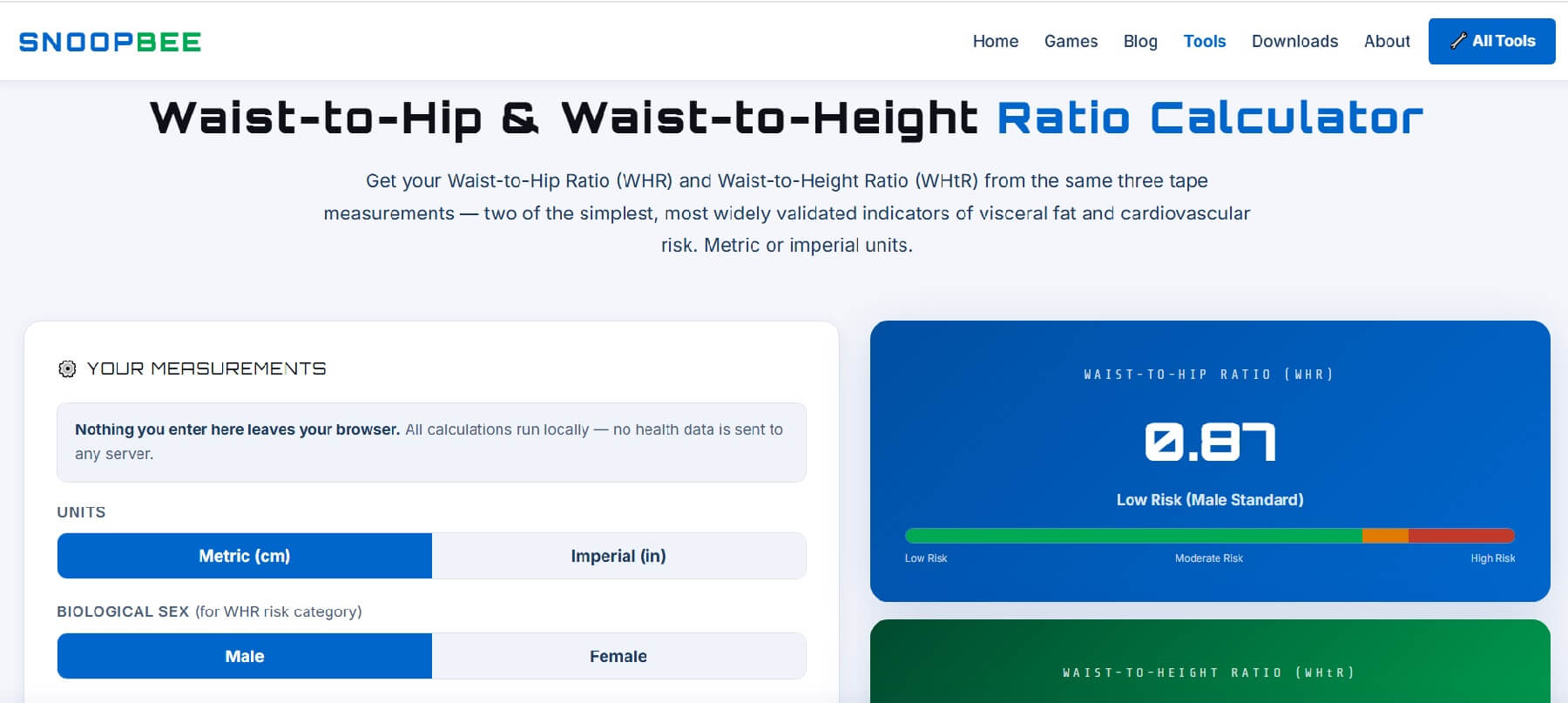
Check Your WHR & WHtR Before Your Next Health Screening
Open the Waist Ratio Calculator →This article is for general educational purposes only and is not financial, legal, insurance, or medical advice. Underwriting practices, rating classes, and product availability vary by insurer, country, and change over time — always confirm current terms directly with a licensed insurance provider or broker in your jurisdiction. This article does not endorse or recommend any specific insurer or policy. Last updated: August 2026.
💬 Questions & Reader Comments
Ask a question about how waist ratios affect insurance in your country, or share your own experience. (Max 200 words)