Why Insurers Care About BMI and Metabolic Health at All
Underwriting is the process an insurer uses to assess how risky it is to insure a particular applicant, and to set a premium that reflects that risk. For life, health, and critical illness insurance, body composition and metabolic health markers are among the most consistently used risk factors in the world, because decades of actuarial data across many countries show a statistical link between elevated BMI, poor metabolic health, and higher rates of cardiovascular disease, type 2 diabetes, certain cancers, and earlier mortality.
It helps to think of an insurance company the way you'd think of a bank deciding on a loan's interest rate. A bank doesn't refuse to lend to anyone with a lower credit score — it simply charges a higher interest rate to offset the statistically higher risk of default. Life and health insurers do something structurally very similar with health data: they don't usually refuse an otherwise-eligible applicant outright for a moderately elevated BMI, they adjust the price.
This matters directly to anyone who has just calculated their BMI, BMR, or TDEE using a health calculator like the one on this site: those same underlying numbers — or close cousins of them, like waist circumference, blood pressure, and cholesterol, gathered during a medical exam — are frequently the exact inputs an insurer's underwriting team plugs into their own rating tables.
How Life Insurance Underwriting Actually Works
In most fully underwritten life insurance markets, applying for a policy above a certain coverage amount typically triggers a paramedical exam: a nurse or technician visits or you visit a clinic, and they record height, weight, blood pressure, and often a blood and urine sample checking cholesterol, blood sugar (sometimes HbA1c), liver and kidney markers, and sometimes nicotine metabolites. Insurers then sort applicants into rating classes, each with a different premium multiplier for identical coverage:
| Rating Class | Typical Profile | Relative Premium |
|---|---|---|
| Preferred Plus / Super Preferred | Excellent biometrics, BMI in normal range, no risk factors | Lowest (baseline) |
| Preferred | Very good biometrics, BMI slightly above normal or one minor risk factor | ~10–20% above baseline |
| Standard Plus / Standard | Average biometrics, BMI in overweight range or a couple of minor risk factors | ~25–50% above baseline |
| Substandard / Table-Rated | BMI in obese range and/or multiple risk factors (e.g., elevated blood pressure plus elevated blood sugar) | Often 50–200%+ above baseline, in defined "table" steps |
Key insight: BMI rarely acts alone. An insurer's overall rating class usually blends BMI with blood pressure, cholesterol, blood sugar, family history, and tobacco use. A moderately elevated BMI paired with otherwise excellent numbers (normal blood pressure, normal blood sugar, non-smoker) often still lands in a favorable rating class — it's the combination of risk factors that typically drives the largest premium jumps, not BMI viewed in isolation.
Build Charts: The Height/Weight Tables Insurers Use
Most life insurers publish (or use internally) a build chart — a table listing, for every height, the maximum weight allowed to qualify for each rating class. These build charts are conceptually similar to BMI, but insurers often use their own internal versions rather than the simple public BMI formula, and they may weight height and weight slightly differently than the standard BMI calculation. Some insurers also incorporate waist circumference or waist-to-hip ratio directly into a "build and blood pressure" combined table, since those measures better reflect visceral fat distribution than BMI alone.
Why this matters if you're shopping for coverage: because build charts vary meaningfully between insurers, the exact same height, weight, and lab results can land you in "Preferred" at one company and "Standard" at another. This is precisely why independent insurance brokers who can compare an applicant against multiple companies' build charts often secure meaningfully better rates than applying directly to a single insurer — the underwriting guidelines genuinely differ company to company.
Critical Illness & Disability Insurance
Critical illness insurance pays a lump sum upon diagnosis of a covered condition — commonly heart attack, stroke, cancer, or organ failure — rather than paying out on death like life insurance does. Because these are near-term diagnosable events rather than long-run mortality risk, critical illness underwriters often weigh current metabolic health markers (BMI, blood pressure, blood sugar, cholesterol) even more heavily than life insurers do, since these markers are more directly predictive of a near-term cardiovascular or metabolic diagnosis specifically. Disability insurance underwriting follows a broadly similar biometric-driven pattern, since obesity-related joint and metabolic conditions are common causes of long-term disability claims.
Health Insurance: Premiums vs. Access
Health insurance underwriting works very differently depending on the country's regulatory system, and it's important not to assume the life-insurance model above applies everywhere:
- Individually underwritten private health insurance (common in parts of the US individual market prior to certain reforms, and in some private supplemental markets elsewhere) can price premiums based on BMI and health history much like life insurance.
- Community-rated or guaranteed-issue systems (much of the EU's statutory health insurance, the UK's NHS, Canada's provincial health plans, Australia's Medicare) generally do not vary the core premium by individual BMI at all — funding instead comes from taxes or income-based contributions, and access is not medically underwritten.
- Employer-sponsored group health insurance (common in the US, and increasingly in India and parts of Asia) typically pools risk across the whole employee group rather than underwriting each individual, though some employers layer optional wellness incentives on top.
Practical distinction: if your health coverage comes from a national or provincial public system, or a standard employer group plan, your personal BMI usually has little to no direct effect on your premium. It's specifically in the individually underwritten life insurance, critical illness insurance, and some supplemental private health insurance markets where BMI and metabolic health metrics translate directly into a different price.
A Worldwide Tour: Why the BMI Numbers Themselves Differ by Region
Most of the regional variation covered in our companion insurance articles is about market structure — which countries underwrite a given metric at all, and which leave it to a public system. BMI is unusual because the underlying cut-off numbers themselves genuinely differ by region under real, published clinical guidance, not just how insurers choose to use them.
The WHO Action Points Behind Asian-Pacific Thresholds
As covered in our companion educational guide, a WHO Expert Consultation published in The Lancet in 2004 reviewed evidence that Asian populations face substantially elevated diabetes and cardiovascular risk at BMI levels below the WHO's original global overweight threshold of 25 kg/m². Rather than replacing the global standard outright, the consultation added specific public health action points — 23.0, 27.5, 32.5, and 37.5 kg/m² — for countries to apply where locally appropriate. (WHO Expert Consultation, 2004, The Lancet) This is the same published action-point framework this calculator's Asian-Pacific toggle is built around.
How This Plays Out in Underwriting
Insurers in India, China, and several Southeast Asian markets that have adopted these lower action points into their build charts are, in effect, applying a genuine WHO-recognized clinical distinction — not an arbitrary regional discount. An applicant with a BMI of 24, for example, sits comfortably within the WHO global "normal" range but is already at the 23.0 action point flagged by the 2004 consultation, which is why the same number can be treated differently depending on which threshold framework an insurer has adopted.
Where the Global Standard Still Applies
Insurers in the US, Canada, UK, EU, Australia, and New Zealand generally continue to apply the WHO's original global cut-offs (25 and 30 kg/m²) in build charts, since the action-point framework was specifically developed in response to Asian population data rather than as a universal replacement. This is a genuine, citable clinical basis for a regional difference — worth knowing if you're comparing how the same BMI number might be read differently depending on which market's underwriting guidelines apply to your policy.
Illustrative simplification of each country's core public/basic health coverage system. Private supplemental health insurance, life insurance, and critical illness insurance are individually underwritten in nearly all of these markets regardless of how the core public system works.
Wellness Programs & Wearable-Linked Discounts
A growing number of life and health insurers worldwide — across the US, UK, South Africa, Australia, and increasingly India and Southeast Asia — now offer wellness program discounts: policyholders who complete an annual health screening, hit step-count or exercise targets (sometimes tracked via a connected wearable like a fitness band or smartwatch), or demonstrate improved biometric markers over time can earn premium reductions, cashback, or loyalty rewards.
💡 Where Your Calculator Results Fit In
Many of these wellness programs ask for the exact same starting data this calculator uses — height, weight, and activity level — as part of an initial health assessment, then track improvement over subsequent screenings. Knowing your current BMI category and TDEE-based calorie target before a screening appointment means no surprises, and gives you a concrete, evidence-based starting point for any improvement plan the program rewards.
How to Qualify for Better Rates Over 6–12 Months
- Get an accurate current picture first. Use this calculator's BMI, BMR, and TDEE numbers as your honest starting baseline before assuming a rating class outcome — many applicants overestimate how far outside "preferred" ranges they actually are.
- Address blood pressure and blood sugar alongside weight. Since insurers combine multiple risk factors, improving blood pressure or fasting glucose can move you up a rating class even before a target weight is reached.
- Ask about a reconsideration or re-rate after sustained improvement. Most insurers allow applying for a better rating class after roughly 6–12 months of demonstrated, sustained improvement, verified with a fresh exam — this is worth asking about directly rather than assuming it isn't offered.
- Compare build charts across insurers, ideally through an independent broker. Because build charts genuinely differ between companies, the same biometric profile can be priced very differently at different insurers.
- Enroll in wellness or biometric-tracking programs where available — many pay back a portion of premiums or offer direct discounts simply for participating and showing gradual improvement, independent of hitting a final target number.
Frequently Asked Questions
Does BMI affect life insurance premiums?
Yes, in most underwritten markets. Insurers use height and weight, often with a paramedical exam, to place applicants into rating classes that carry different premiums for the same coverage amount.
Can I get better insurance rates by lowering my BMI?
Often yes, depending on the insurer and how far outside the preferred range you currently sit. Many insurers allow a rate reconsideration after a sustained period of improved biometric numbers, usually shown through a new exam.
Do all countries use BMI for insurance underwriting the same way?
No. Practices vary by country and regulatory regime — some rely on individually underwritten private life and health insurance with detailed build charts, while others provide publicly funded, community-rated core health coverage with no individual medical underwriting.
What is a wellness program discount?
A premium reduction some insurers offer for completing health screenings, hitting exercise targets, or demonstrating improved biometric markers over time, often tracked through a connected wearable device.
Is critical illness insurance underwritten differently from life insurance?
Critical illness insurance uses similar biometric factors but pays out on diagnosis of a covered condition rather than on death, so insurers often weigh near-term metabolic disease risk factors especially heavily.
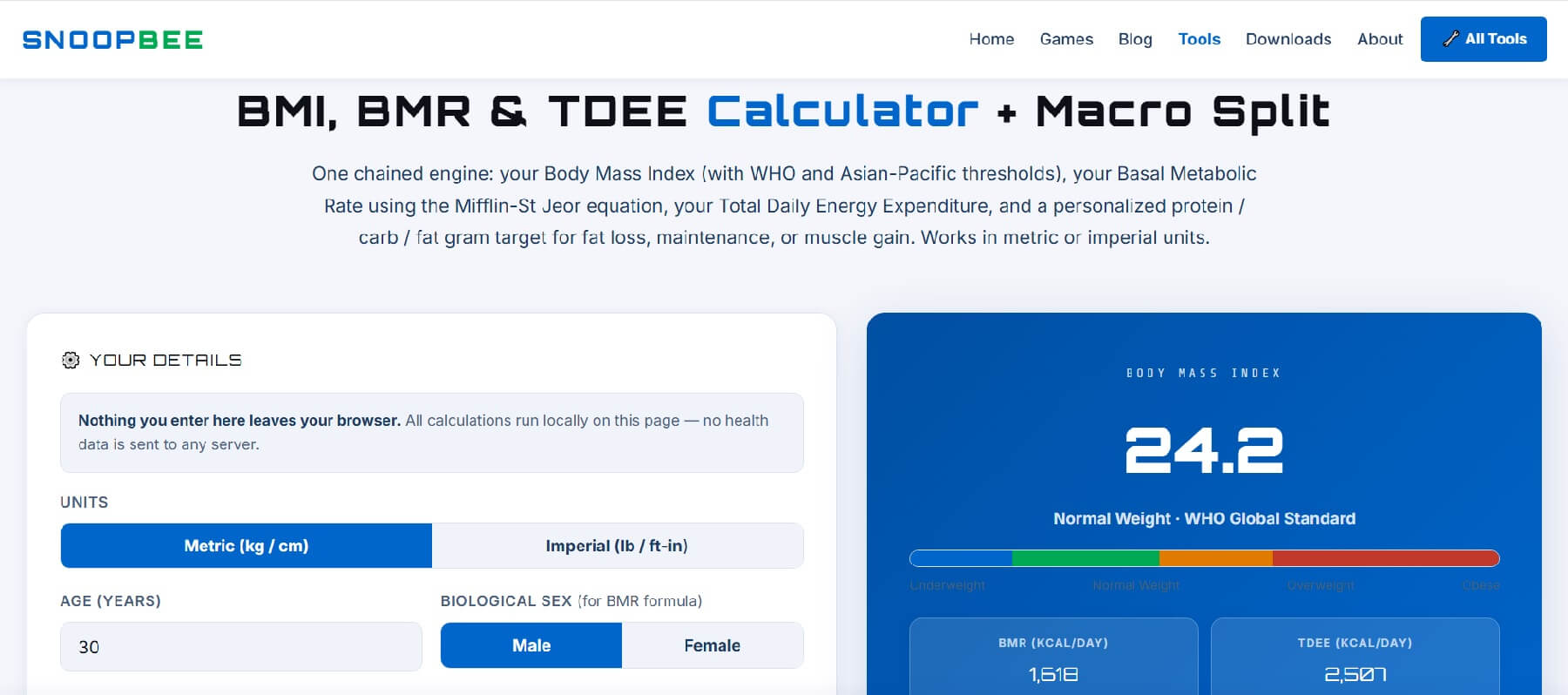
Check Your BMI, BMR & TDEE Before Your Next Health Screening
Open the BMI, BMR & TDEE Calculator →This article is for general educational purposes only and is not financial, legal, insurance, or medical advice. Underwriting practices, rating classes, and product availability vary by insurer, country, and change over time — always confirm current terms directly with a licensed insurance provider or broker in your jurisdiction. This article does not endorse or recommend any specific insurer or policy. Last updated: August 2026.
💬 Questions & Reader Comments
Ask a question about how health metrics affect insurance in your country, or share your own experience. (Max 200 words)