Why Body Composition Matters More Than Weight Alone to Underwriters
Body composition, in an underwriting context, refers to the split between fat mass and lean mass that a given bodyweight represents — and increasingly, specifically where that fat is stored on the body, since fat stored around the abdomen and internal organs carries meaningfully more cardiometabolic risk than fat stored elsewhere.
Two applicants with an identical BMI can represent very different actuarial risk to an insurer, precisely for the reasons discussed in our companion guide on body fat percentage: one may be a lean, muscular athlete, the other may carry a higher proportion of visceral fat around the midsection. Because actuarial data consistently link visceral fat specifically — not just total bodyweight — to elevated cardiovascular and metabolic disease risk, insurers worldwide have gradually moved toward incorporating measurements that get closer to body composition, rather than relying on height and weight alone.
This shift reflects decades of accumulated actuarial and epidemiological research. Large long-term population studies conducted across North America, Europe, and Asia have repeatedly found that individuals with similar overall bodyweight, but different fat distribution patterns, experience meaningfully different rates of heart disease, stroke, and type 2 diabetes over time. Abdominal, or "central," fat storage in particular has emerged across this research as a more consistent predictor of these outcomes than overall weight or even BMI. Insurance actuaries — the professionals who translate this kind of population health research into pricing models — have incorporated these findings gradually into underwriting guidelines over the past two decades, which is why waist circumference measurement, discussed next, has become an increasingly standard addition to paramedical exams that historically recorded only height and weight.
Waist Circumference: The Practical Proxy Insurers Actually Use
Very few insurers ask a paramedical nurse to bring skinfold calipers or arrange a DEXA scan — those tools remain too specialized and costly for routine underwriting at scale. Instead, the practical, low-cost measurement that has increasingly found its way into underwriting guidelines is waist circumference, sometimes combined into a waist-to-height ratio.
| Risk Level (General Reference) | Men — Waist Circumference | Women — Waist Circumference |
|---|---|---|
| Lower Risk | Below 94 cm (37 in) | Below 80 cm (31.5 in) |
| Increased Risk | 94–102 cm (37–40 in) | 80–88 cm (31.5–34.6 in) |
| Substantially Increased Risk | Above 102 cm (40 in) | Above 88 cm (34.6 in) |
Why this connects directly to your body fat calculator results: the waist measurement you enter into the US Navy body fat formula is very often the exact same number, or close to it, that shows up on an insurance paramedical exam form. Understanding your waist circumference trend ahead of a policy application or renewal gives you a genuine preview of one of the actual inputs an underwriter will record.
What Happens at a Paramedical Exam
For life insurance coverage above a given sum-assured threshold (which varies by insurer and country), applicants are typically asked to complete a paramedical exam: a nurse or technician records height, weight, waist circumference (increasingly common), blood pressure, and collects a blood and urine sample. That data feeds into the insurer's build chart and overall rating-class decision, as covered in more depth in our companion guide on how BMI affects insurance.
- Height & weight establish your position on the insurer's build chart.
- Waist circumference, where collected, refines that assessment by flagging visceral fat risk independent of overall BMI.
- Blood pressure and blood work (cholesterol, blood sugar/HbA1c) capture the downstream metabolic consequences that body composition often drives.
The combination matters more than any single number: an applicant with an elevated waist measurement but excellent blood pressure and blood sugar readings will typically be rated more favorably than one with the same waist measurement plus multiple additional risk factors. Insurers are pricing overall cardiometabolic risk, not any single measurement in isolation.
Common Misconceptions About Body Composition and Insurance
A few misunderstandings come up repeatedly among people researching how their body composition might affect an insurance application, and clearing them up can help set realistic expectations before applying:
- "A high body fat percentage automatically disqualifies me." In nearly all underwritten markets, this isn't how the system works. Even applicants in higher-risk rating classes typically remain eligible for coverage — the practical effect is usually a higher premium for the same coverage amount, not an outright denial, except at the most extreme end of the risk spectrum combined with multiple additional serious health conditions.
- "My gym's body fat scale reading is what the insurer will use." It generally isn't. Consumer bioelectrical impedance scales, while useful for personal trend tracking, are not the measurement insurers typically rely on — paramedical exams use height, weight, and increasingly waist circumference measured by tape, which is a different (and for underwriting purposes, more standardized) data point.
- "Losing weight quickly right before my exam will improve my rate." Rapid, short-term weight loss immediately before a scheduled medical exam is generally not an effective strategy, and can sometimes backfire — sudden weight changes can affect blood pressure and other lab values in ways that don't necessarily read as favorably as sustained, gradual improvement would.
- "Once I'm rated, I'm stuck with that rate forever." As covered in the improvement section below, most insurers do allow a reconsideration or re-rate request after a sustained period of improvement, verified with updated measurements — the initial rating is rarely permanent and unchangeable.
Critical Illness & Cardiometabolic Risk
Critical illness insurance, which pays a lump sum on diagnosis of conditions like heart attack, stroke, or certain cancers, is particularly sensitive to body composition-linked risk factors, since these conditions are strongly associated with visceral fat accumulation and metabolic syndrome. Insurers offering critical illness cover — a very popular product category in markets like the UK, Canada, China, and much of Southeast Asia — often weigh waist circumference and blood metabolic markers especially heavily precisely because these are among the most direct, near-term predictors of the specific conditions the policy covers.
A Worldwide Tour: Which Body Fat Measurement Method Dominates Where
Beyond which markets underwrite body composition at all, a more specific regional pattern is worth knowing: the measurement method that actually dominates clinical and consumer use — the same methods our companion educational guide covers — varies considerably by region, which shapes what data is realistically available for an insurer to draw on in the first place.
Japan & East Asia: The Home of the Consumer BIA Scale
Bioelectrical impedance analysis (BIA) — the technology behind ordinary bathroom body-fat scales — has a specifically Japanese origin story: Tanita, a Japanese company, brought the world's first consumer body-fat scale to market in 1992, and BIA devices from Tanita and fellow Japanese manufacturer Omron have remained especially prevalent in home, gym, and clinical settings across Japan and much of East Asia ever since. This matters for insurance in a practical sense: in markets where BIA readings are already a routine part of annual health checks (including Japan's own workplace health screening system), that data is simply more available and more culturally familiar as a health metric than in markets where it isn't.
United States & United Kingdom: Skinfold's Military and Sports-Science Roots
The Jackson-Pollock skinfold method covered in our companion guide was developed and validated primarily within American sports science and exercise physiology research, and skinfold calipers remain a standard field method in US and UK military fitness testing and collegiate athletics — settings where a trained tester and a purpose-built tool are already part of routine practice, distinct from the self-service BIA culture more common in East Asian consumer markets.
Where DEXA Sits: The Clinical Reference Standard, Unevenly Distributed
DEXA scanning, the most precise method covered in our companion guide, remains concentrated in hospital and university research settings worldwide rather than any single region's routine consumer or insurance practice — meaning that regardless of country, the precise reference-standard measurement is rarely what feeds into an actual underwriting decision. In practice, insurers everywhere rely far more on the waist circumference proxy discussed above than on any direct body-fat measurement method, which is precisely why understanding waist-based underwriting matters more practically than knowing which body-fat method a given region prefers.
General reference thresholds commonly cited in international clinical and underwriting guidance. Individual insurer thresholds vary by company and country.
Wellness Programs & Body Composition Tracking
An increasing number of life and health insurers offer wellness programs that track biometric trends — including waist circumference and sometimes bioelectrical impedance body fat readings from a connected smart scale — over time, rewarding sustained improvement with premium discounts, cashback, or loyalty points, independent of any single starting measurement.
💡 Where Your Calculator Results Fit In
The exact waist, neck, and hip measurements this calculator's US Navy method uses are frequently the same measurements recorded during a wellness program's initial biometric screening. Knowing your current numbers and category ahead of a screening appointment gives you a clear, evidence-based starting point.
Practical Steps to Improve Your Rating Over Time
- Track waist circumference alongside bodyweight, not weight alone — since it's the more specific number many insurers now weigh directly, and it can meaningfully improve even when total bodyweight changes only modestly.
- Address blood pressure and blood sugar in parallel — since insurers combine multiple cardiometabolic markers, improvement across several factors together tends to move rating classes more than any single measurement alone.
- Ask about a re-rate after sustained improvement, typically after 6–12 months, verified with an updated exam.
- Compare underwriting guidelines across insurers where possible, ideally through an independent broker, since build charts and waist-circumference thresholds genuinely differ between companies.
- Enroll in available wellness or biometric tracking programs, which can offer discounts for sustained improvement even before a full rating-class change is achieved.
Shopping for Coverage: Questions Worth Asking an Insurer or Broker
Since underwriting guidelines genuinely differ between companies, a short list of direct questions can save meaningful money over the life of a policy, particularly for anyone whose body composition sits outside the most favorable rating tier:
- "Does your build chart incorporate waist circumference, or only height and weight?" Insurers that have adopted waist-based refinements may rate a given applicant more favorably than one relying purely on an older height-weight table, or vice versa depending on the specific profile.
- "What is your policy on rate reconsideration after improved biometrics?" Confirming this upfront, and understanding what timeframe and evidence is required, sets clear expectations rather than assuming it either does or doesn't exist.
- "Do you offer a wellness or biometric-tracking program with premium discounts?" Availability varies significantly by insurer and country, and this is often not advertised prominently unless asked about directly.
- "How is critical illness underwriting different from your life insurance underwriting for my profile?" Since the two products weigh cardiometabolic risk factors somewhat differently, it's worth asking specifically rather than assuming identical treatment.
Why a broker can help: an independent insurance broker who works with multiple insurers, rather than a single company's own sales agent, can typically compare an applicant's profile against several different build charts and underwriting guidelines simultaneously — which is often the single most effective way to find the most favorable rate for a specific body composition profile, without needing to apply separately to each insurer.
Frequently Asked Questions
Do insurers measure body fat percentage directly?
Rarely with calipers or DEXA. Most rely on height, weight, and increasingly waist circumference as a practical proxy for body composition and visceral fat risk.
Why do insurers care about waist circumference specifically?
It's a strong, low-cost proxy for visceral fat, which carries a stronger link to cardiovascular disease and diabetes than overall bodyweight or BMI alone.
Can improving my body composition lower my premium even if my weight stays the same?
Potentially yes, particularly if it's reflected in a smaller waist measurement or improved blood pressure and blood sugar at a future exam or policy review.
Do all insurers worldwide use the same body composition thresholds?
No — guidelines vary by insurer and country, with some Asian markets applying more conservative, population-specific thresholds given regional health data.
Are wellness screenings the same as an insurance medical exam?
No. A wellness screening is typically voluntary and ongoing for earning rewards, while a medical exam is a one-time underwriting step that determines your initial rating class.
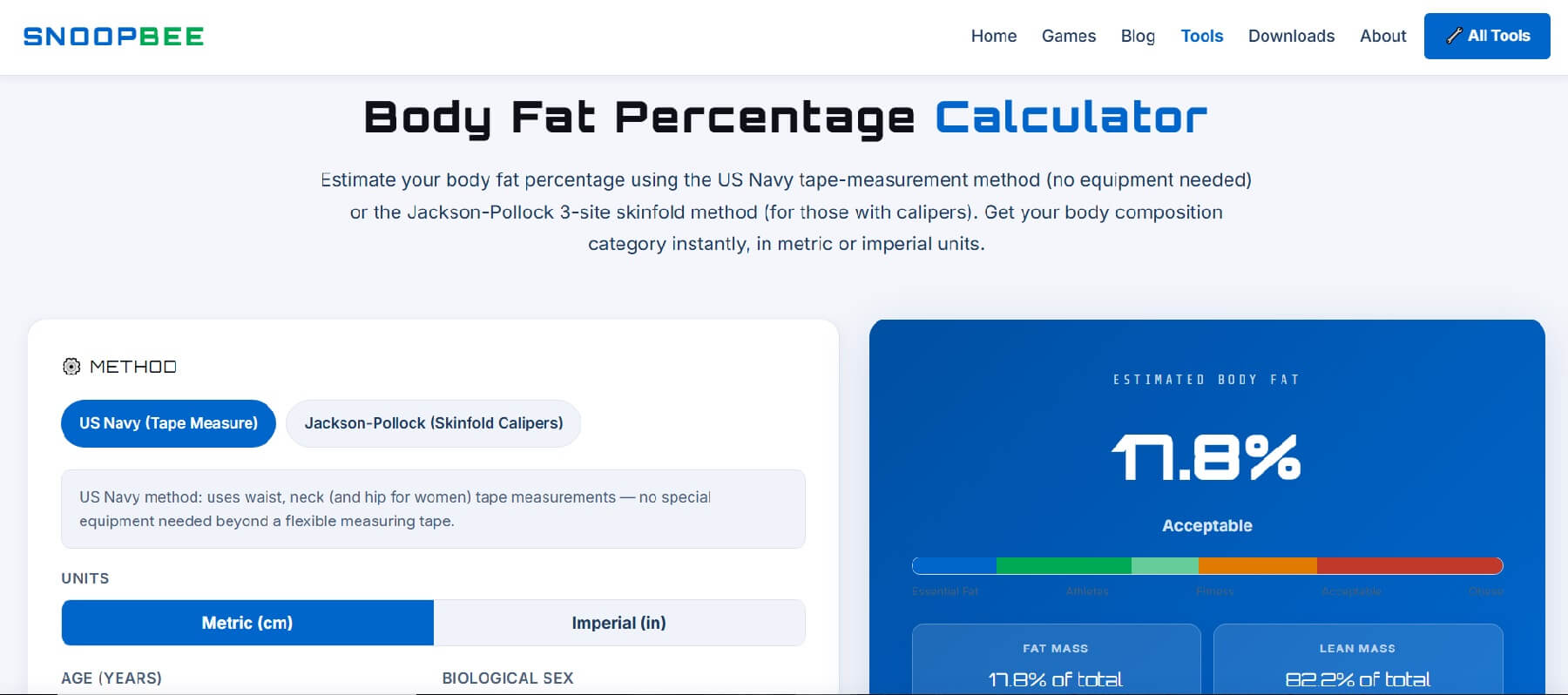
Check Your Body Fat % & Waist Measurements Today
Open the Body Fat Percentage Calculator →This article is for general educational purposes only and is not financial, legal, insurance, or medical advice. Underwriting practices, rating classes, and product availability vary by insurer, country, and change over time — always confirm current terms directly with a licensed insurance provider or broker in your jurisdiction. This article does not endorse or recommend any specific insurer or policy. Last updated: August 2026.
💬 Questions & Reader Comments
Ask a question about how body composition affects insurance in your country, or share your own experience. (Max 200 words)