The Grip Strength & Mortality Research
One of the more striking findings in population health research over the past two decades is the consistent association between grip strength — a simple, easily measured proxy for overall muscular strength — and a range of long-term health outcomes, including all-cause mortality risk, even after statistically adjusting for other known risk factors.
Large population studies, including the Prospective Urban Rural Epidemiology (PURE) study spanning 17 countries, have found that lower grip strength is associated with higher risk of death and cardiovascular events, independent of traditional risk factors like blood pressure and BMI. In that study, published in The Lancet, every 5 kg decline in grip strength was associated with a 16% higher risk of death from any cause and a 17% higher risk of cardiovascular death — findings the researchers noted made grip strength a stronger predictor of mortality than systolic blood pressure in their cohort. (Leong et al., 2015, The Lancet) This research has fueled growing interest among some health researchers and, increasingly, insurance industry analysts in muscular strength as a potentially underused marker of overall health, separate from and complementary to the more traditional risk factors underwriters have relied on for decades.
Importantly, this research generally centers on grip strength specifically — a strength measure that's quick and inexpensive to test with a simple dynamometer — rather than 1RM on barbell lifts, which requires equipment, technique, and considerably more time to properly assess. This distinction matters for understanding why grip strength has drawn more direct research and underwriting-adjacent interest than barbell 1RM specifically, even though both reflect overlapping underlying muscular fitness.
Fitness on a Paramedical Exam
A standard life insurance paramedical exam does not typically include a grip strength test, a 1RM assessment, or any other direct strength measurement as part of the routine panel, which usually focuses on height, weight, blood pressure, resting heart rate, and blood or urine samples for markers like cholesterol and glucose, as our companion articles on these topics describe. This means that, unlike blood pressure or HbA1c, there currently isn't a standard data point on a typical application that captures strength directly, however good the underlying research connecting strength to health outcomes may be.
Some insurers have begun exploring supplementary fitness assessments as part of broader wellness or "accelerated underwriting" programs, which use expanded data sources — sometimes including fitness tracker data — to streamline the underwriting process for certain applicants. These remain a minority of overall policies issued today, but represent a direction some insurers are exploring as fitness-tracking technology becomes more widespread and standardized across consumer devices.
It's also worth noting that some employer-sponsored group wellness programs, distinct from individually underwritten life insurance, have experimented with grip strength or basic fitness testing as part of broader workplace health initiatives — though these typically function as voluntary health promotion tools rather than inputs into any individual's insurance premium or coverage terms.
How Strength Shows Up Indirectly in Underwriting
Despite the compelling research on grip strength and health outcomes, most consumer life and health insurance applications today do not directly measure grip strength, 1RM, or any other explicit strength metric as a standard underwriting input. Instead, the health benefits associated with being strong and engaging in regular strength training tend to show up indirectly, through the more traditional metrics insurers already measure directly.
- BMI and build. Regular strength training tends to support a healthier body composition and can favorably influence BMI and waist measurements, both standard underwriting inputs covered in our companion BMI and waist ratio articles.
- Blood pressure. Resistance training has research support for modestly improving blood pressure over time, connecting back to the cardiovascular risk factors our companion blood pressure article covers in depth.
- Blood sugar and metabolic health. Strength training improves insulin sensitivity and can support healthier HbA1c trends, tying into the metabolic risk factors our companion HbA1c article describes.
- Overall paramedical exam impression. While not a formal scoring metric, an applicant's general physical condition can inform an examiner's overall impression during a routine exam, even if strength itself isn't a checkbox on the form.
In short: strength training's insurance benefit today runs mostly through its well-documented effects on the metrics insurers already measure, rather than through any direct assessment of a person's 1RM or grip strength on a standard application. This may shift gradually as accelerated underwriting programs mature, but for now, the practical path to a favorable rating still runs through BMI, blood pressure, and metabolic health rather than any strength number itself.
Build Charts, Muscle Mass & BMI's Limitations
Most life insurers use "build charts" — tables cross-referencing height and weight against rating classes, functionally similar to BMI categories — as part of standard underwriting. This creates a well-known limitation directly relevant to strength-trained individuals: BMI and simple height-weight build charts cannot distinguish muscle mass from fat mass, meaning a very muscular, low-body-fat individual can occasionally land in a less favorable build-chart category than their actual health and body composition would suggest.
What applicants can do about this: some insurers allow supplementary body composition evidence — such as a body fat percentage measurement, waist circumference, or a physician's note — to support a more accurate rating for applicants whose build chart classification doesn't reflect their true body composition. It's worth proactively raising this if you suspect standard height-weight build charts might misrepresent your actual health profile.
When Low Muscle Mass Is a Red Flag
While excess muscle mass rarely drives an unfavorable underwriting outcome on its own, the opposite pattern — unusually low muscle mass, particularly when combined with significant unexplained weight loss — can be a more genuine underwriting consideration, since it can signal an underlying medical condition an insurer would want to understand fully as part of a complete risk assessment. This is a meaningfully different scenario from simply having a lower-than-average 1RM or not engaging in strength training; it specifically concerns unexplained or medically significant muscle wasting, sometimes called sarcopenia in a clinical context, particularly when it appears alongside other concerning symptoms or lab findings.
Powerlifting, Strongman & Hazardous Activity Classifications
Recreational strength training and even competitive powerlifting or weightlifting generally do not trigger a hazardous activity classification the way certain other pursuits (aviation, extreme sports, some motorsports) can on a life insurance application. Standard applications typically ask about specific named hazardous activities and occupations rather than fitness level or training intensity generally, meaning a dedicated powerlifter training heavily several times a week is not automatically treated differently from a casual gym-goer purely on that basis.
Where this can shift is with genuinely extreme or unconventional strength-adjacent pursuits — certain strongman events involving unusual equipment or highly specialized competitive lifting at an elite level with a documented injury history — which some insurers may ask about or assess individually, though this remains a fairly narrow edge case rather than a common concern for the large majority of recreational and competitive lifters.
Health Insurance Considerations
Health insurance underwriting for strength-related factors mirrors the pattern our companion blood pressure and HbA1c articles describe: in the United States, ACA rules prevent individual and small-group plans from pricing based on pre-existing conditions or fitness level, and employer-sponsored group plans typically don't individually underwrite members at all. In markets with more individually underwritten private health products, an unusual body composition profile is unlikely to be a standalone factor, though any related medical conditions would be assessed on their own merits as with any other health insurance application.
Disability Insurance & Physical Occupations
Disability insurance underwriting weighs occupation heavily, and physically demanding occupations — including some that require substantial baseline strength, like certain trades, emergency services, and manual labor roles — are assessed based on the physical demands and injury risk profile of the occupation itself, rather than the individual applicant's personal 1RM or strength level. Two applicants in the same physically demanding occupation are generally rated similarly regardless of their personal training background, since disability underwriting is fundamentally occupation-based rather than an assessment of individual fitness level.
A Worldwide Tour: Fitness Data & Regional Underwriting
What actually varies by region isn't whether strength itself is measured — as established above, it generally isn't, anywhere — but how far each market has gone in accepting fitness-tracker and wearable data as a supplementary underwriting input, since that's the most plausible route strength training data could eventually enter formal underwriting.
United States, Canada, UK & EU
These markets have the most mature wearable-linked wellness programs (covered in the next section), and some insurers here have begun piloting accelerated-underwriting products that ingest opt-in fitness tracker data alongside traditional build charts — still a minority of policies, but the furthest along of any region in treating fitness activity as a data point rather than just a wellness perk.
India, China & Southeast Asia
Wearable adoption is growing quickly in these markets, and several insurers have launched app-based wellness programs tied to step counts and gym check-ins, but formal underwriting still runs almost entirely through traditional build charts and cardiometabolic markers rather than fitness-tracker data specifically.
Japan, Australia & New Zealand
Japan's private supplemental life insurers and Australia/New Zealand's income-protection insurers have experimented with wearable-linked discount programs, but — as in every region covered here — none currently incorporate a direct strength or grip-strength measurement into the underwriting decision itself.
Wellness Programs & Strength Training
A number of life and health insurers worldwide now offer wellness programs rewarding measurable healthy activity — gym check-ins, connected fitness tracker data, and general exercise engagement — with premium discounts, cashback, or loyalty points, similar in structure to the sleep-, blood-pressure-, and glucose-linked wellness programs our companion articles describe. Strength training sessions, whether logged manually or via a connected fitness app, increasingly count toward these activity-based reward thresholds alongside cardio-based activity.
💡 Where Your Calculator Results Fit In
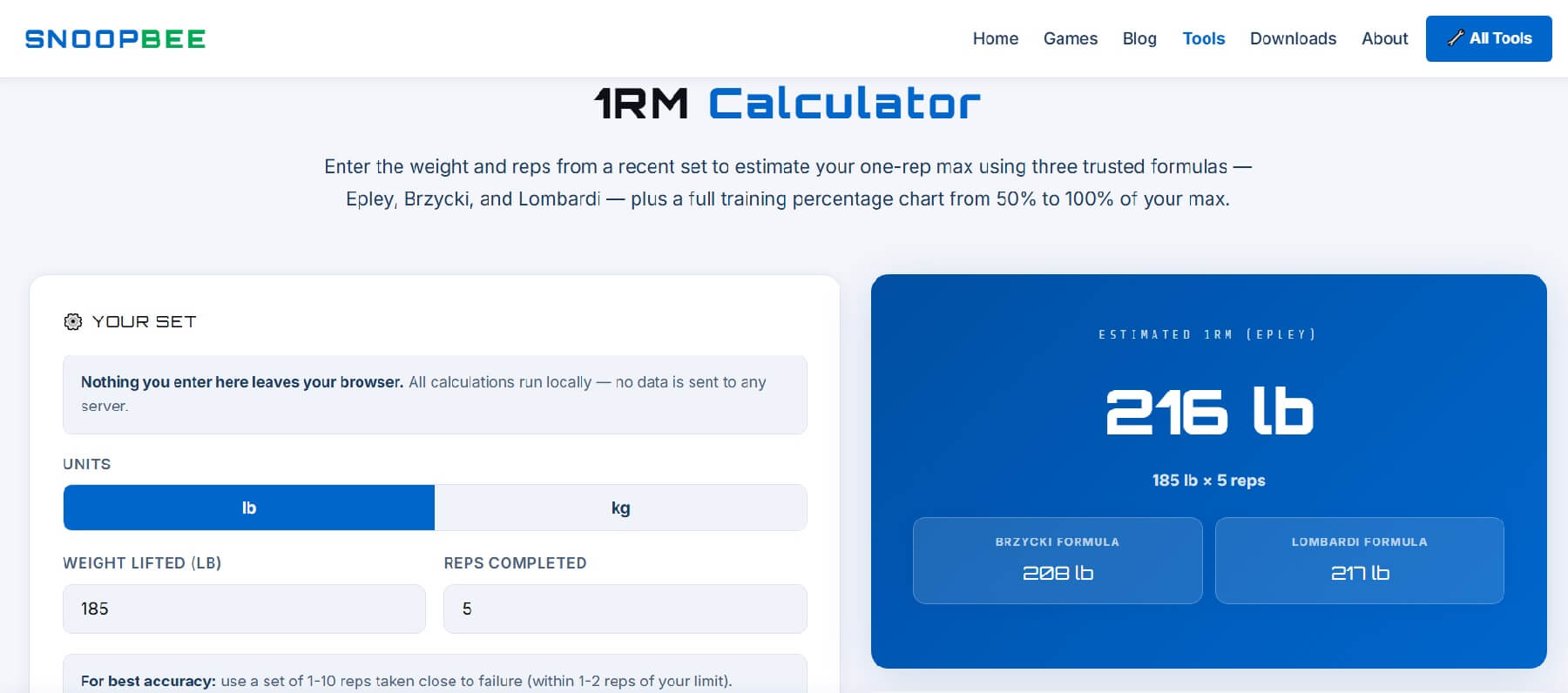
Programs that reward exercise activity generally look for consistent engagement over time, not a single impressive lift — exactly the kind of ongoing training log the 1RM calculator above is designed to support. Tracking your estimated 1RM progression across training cycles builds a documented fitness engagement record that dovetails naturally with these programs' underlying goals.
Practical Steps Worth Taking
- Don't expect your 1RM to appear on an application — focus instead on the metrics that do: BMI, blood pressure, and metabolic markers, all of which strength training genuinely supports over time.
- If your build chart classification seems off due to muscle mass, proactively ask your insurer or broker whether supplementary body composition evidence can support a more accurate rating.
- Disclose named hazardous activities accurately if asked, even if you don't expect general strength training or powerlifting to qualify — when in doubt, ask your insurer directly rather than guessing.
- Ask about wellness program eligibility for strength training activity specifically, since program terms and qualifying activities vary meaningfully between insurers.
- Address unexplained muscle loss or weight loss with a doctor rather than insurance underwriting specifically in mind — resolving or understanding the underlying cause matters more for both your health and any future insurance application.
Frequently Asked Questions
Does being stronger lower my life insurance premium?
Not directly through a 1RM number, but muscular fitness is associated with favorable outcomes on the metrics insurers do measure directly, like BMI, blood pressure, and overall build, and some wellness programs reward strength training activity itself.
Is grip strength actually used in insurance underwriting?
Not as a standard, directly measured underwriting factor in most consumer life insurance applications today, though it's a well-established research marker of overall health and mortality risk in population studies.
Does powerlifting or heavy weightlifting increase my insurance risk classification?
Generally no for standard life insurance, though certain extreme strength sports or professional competition may be assessed under an insurer's hazardous activities guidelines depending on the specific policy and insurer.
Do wellness programs reward strength training?
Increasingly yes — several insurers worldwide now offer wellness programs rewarding gym attendance and general exercise engagement, including strength training.
Does low muscle mass or strength affect insurance underwriting?
Very low muscle mass, particularly when associated with an underlying medical condition or significant unexplained weight loss, can be a relevant underwriting consideration.
Will my insurer ever ask about my 1RM or grip strength directly?
Not on a standard consumer application today. Some insurers are exploring supplementary fitness data as part of newer accelerated underwriting programs, but this remains uncommon compared to traditional metrics like BMI, blood pressure, and cholesterol.
Track Your Strength Training Progress
Open the 1RM Calculator →This article is for general educational purposes only and is not financial, legal, insurance, or medical advice. Underwriting practices, rating classes, and product availability vary by insurer, country, and change over time — always confirm current terms directly with a licensed insurance provider or broker in your jurisdiction, and consult a doctor before beginning any new strength training program. This article does not endorse or recommend any specific insurer or policy. Last updated: August 2026.
Sources: Leong DP, et al. "Prognostic value of grip strength: findings from the Prospective Urban Rural Epidemiology (PURE) study." The Lancet, 2015.
💬 Questions & Reader Comments
Ask a question about how strength training or muscle mass affects insurance in your country, or share your own experience. (Max 200 words)