Why HbA1c Is a Common Underwriting Request
As our companion educational guide explains, HbA1c summarizes roughly the past two to three months of average blood sugar in a single blood draw. For underwriters, this makes it a uniquely efficient data point — a single test that captures sustained metabolic patterns rather than a single-moment glucose snapshot that could be affected by a recent meal or short-term factors.
Diabetes and prediabetes carry well-documented associations with cardiovascular disease, kidney disease, and a range of other complications when poorly controlled over time, which is precisely why life, health, disability, and critical illness insurers weigh HbA1c results and diabetes diagnoses meaningfully in their underwriting frameworks — the same underlying logic our companion blood pressure and sleep apnea insurance articles describe for their respective conditions.
Underwriters also generally consider HbA1c alongside the same broader panel of markers our companion articles on blood pressure and heart rate describe — cholesterol, kidney function markers, blood pressure, and BMI are all frequently reviewed together, since diabetes and prediabetes rarely occur in complete isolation from these other cardiometabolic factors. An applicant with a well-controlled HbA1c but multiple other elevated risk markers may still see a somewhat different rating outcome than one with the same HbA1c and an otherwise clean overall profile.
Diabetes Disclosure & Medical Records
Most life insurance applications ask directly whether the applicant has ever been diagnosed with diabetes or prediabetes, and standard paramedical exams often include a blood or urine glucose screening test as part of the routine panel, alongside cholesterol and other standard markers. If an applicant discloses a prior diagnosis, underwriters typically request the applicant's medical records directly from their treating physician, since these records provide a fuller history — including a trend of past HbA1c results over time, rather than a single point-in-time number — than any single new test taken specifically for the insurance application.
This record request process is one reason diabetes-related underwriting decisions can sometimes take longer than applications without any disclosed conditions: pulling and reviewing several years of HbA1c trend data, along with notes on any complications or treatment changes, gives underwriters a genuinely fuller risk picture than a single snapshot value would, but it does add time to the process compared to a straightforward application.
Applicants sometimes find this record-gathering step frustrating, particularly if their diabetes has been stable and well-managed for years. It's worth understanding that this isn't a sign of a negative outcome — it's simply how thorough underwriting for a chronic condition typically works, and a well-documented, stable history reviewed thoroughly generally supports a better outcome than a decision made on incomplete information.
Prediabetes: Often a Smaller Factor Than Expected
An HbA1c in the prediabetes range (5.7%-6.4%) is common — a substantial share of adults in many countries fall into this category — and most major insurers treat it as a comparatively modest underwriting factor on its own, particularly when unaccompanied by other cardiometabolic risk factors like elevated BMI, blood pressure, or cholesterol. Many applicants with a prediabetes-range result and an otherwise healthy profile still qualify for standard or near-standard rating classes.
Where prediabetes draws more underwriting attention is in combination with other risk factors, following the same "whole picture" underwriting logic our companion blood pressure article describes — an elevated HbA1c alongside elevated blood pressure and BMI paints a more significant cardiometabolic risk picture than any one factor in isolation.
Health Insurance & Pre-Existing Conditions
As with blood pressure, how health insurance treats a diabetes or prediabetes diagnosis depends heavily on the market and plan type. In the United States, the Affordable Care Act prohibits individual and small-group health plans from denying coverage or charging higher premiums based on pre-existing conditions including diabetes, meaning a diagnosis itself doesn't drive individual health insurance pricing in that specific market. Employer-sponsored group health plans, common across the US, Canada, UK, and much of Europe, similarly don't individually underwrite based on a diabetes diagnosis, since group plans price risk across the entire covered population.
In markets with more individually underwritten private health and supplemental insurance products, including parts of Asia and elsewhere, pre-existing condition clauses and waiting periods for diabetes-related claims are more common, making accurate disclosure and a clear understanding of any waiting period particularly important for applicants in those specific markets.
Type 1 vs. Type 2 Diabetes in Underwriting
Insurers typically assess type 1 and type 2 diabetes somewhat differently, reflecting genuine differences in how the two conditions typically present and progress. Type 1 diabetes, generally diagnosed earlier in life and requiring lifelong insulin therapy, is often assessed with particular attention to duration since diagnosis, demonstrated management consistency, and complication history — a well-managed type 1 diagnosis with years of stable control and no complications is generally viewed more favorably than a similar diagnosis with a history of severe hypoglycemic episodes or early complications.
Type 2 diabetes, more closely associated with factors like weight, age, and lifestyle, is often assessed alongside those related factors as part of a broader cardiometabolic risk profile, with treatment type (lifestyle management alone, oral medication, or insulin) and HbA1c control both factoring into the overall rating.
Well-Controlled vs. Poorly Controlled Diabetes
As with hypertension and sleep apnea, this distinction is often the single most consequential factor in how a diabetes diagnosis actually gets rated. An applicant with a diagnosis but a stable, well-controlled HbA1c consistently in or near target range, no significant complications, and consistent treatment adherence is in a materially different risk position than one with poorly controlled, fluctuating readings and emerging complications — and most underwriting guidelines reflect that difference substantially.
| Diabetes Profile | General Underwriting Tendency |
|---|---|
| Prediabetes only, no other risk factors | Often minimal impact; frequently standard or near-standard rating |
| Type 2, diet/lifestyle controlled, stable HbA1c near target | Modest factor; favorable duration and control history help |
| Type 1 or Type 2, medicated, stable and well-controlled | Moderate factor; control history and absence of complications weighted favorably |
| Poorly controlled, elevated HbA1c, or complications present | More significant factor; full history closely reviewed |
Disability & Critical Illness Insurance
Disability insurance underwriting for diabetes tends to focus on how well-controlled the condition is and whether it meaningfully affects capacity to work in a specific occupation — for most people with well-managed diabetes, this impact is limited, though occupations involving significant physical risk from potential hypoglycemic episodes may see more scrutiny. Critical illness insurance, given its direct link to cardiovascular event payouts, weighs diabetes's well-documented cardiovascular risk association especially heavily, similar to how it treats hypertension and sleep apnea in our companion articles.
A Worldwide Tour: Ethnicity, BMI Thresholds & Regional Underwriting
What genuinely varies by region for diabetes risk isn't the underwriting logic, which is fairly consistent worldwide, but the BMI level at which type 2 diabetes risk actually starts rising — research has found several Asian populations develop diabetes at meaningfully lower BMI levels than the thresholds originally established from predominantly Western population studies.
United States, Canada, UK & EU
Standard BMI-based screening thresholds, originally derived largely from Western population data, remain the default across underwriting in these markets, generally used alongside HbA1c and other lab findings rather than adjusted for individual ethnicity within a single applicant pool.
India, China & Southeast Asia
The World Health Organization has published lower BMI "action points" specifically for South and East Asian populations, reflecting research that diabetes and cardiometabolic risk rise at meaningfully lower BMI levels in these populations than Western-derived thresholds would suggest — a genuinely distinct regional consideration for how diabetes risk gets assessed here, separate from the private-insurance-market-growth story alone.
Japan, Australia & New Zealand
Japan's national health screening standards reflect similar lower-BMI-threshold thinking specific to East Asian populations; Australia and New Zealand's significant South and East Asian immigrant communities have prompted ongoing public health discussion of whether population-wide BMI thresholds fully capture diabetes risk across all groups within these countries.
Wellness Programs & Glucose Monitoring
A number of life and health insurers worldwide now offer wellness programs rewarding measurably healthy behaviors, and blood sugar management is increasingly part of that picture — some programs reward consistent, in-range glucose data from connected continuous glucose monitors, similar in structure to the sleep- and blood-pressure-linked wellness programs our companion articles describe.
💡 Where Your Converter Results Fit In
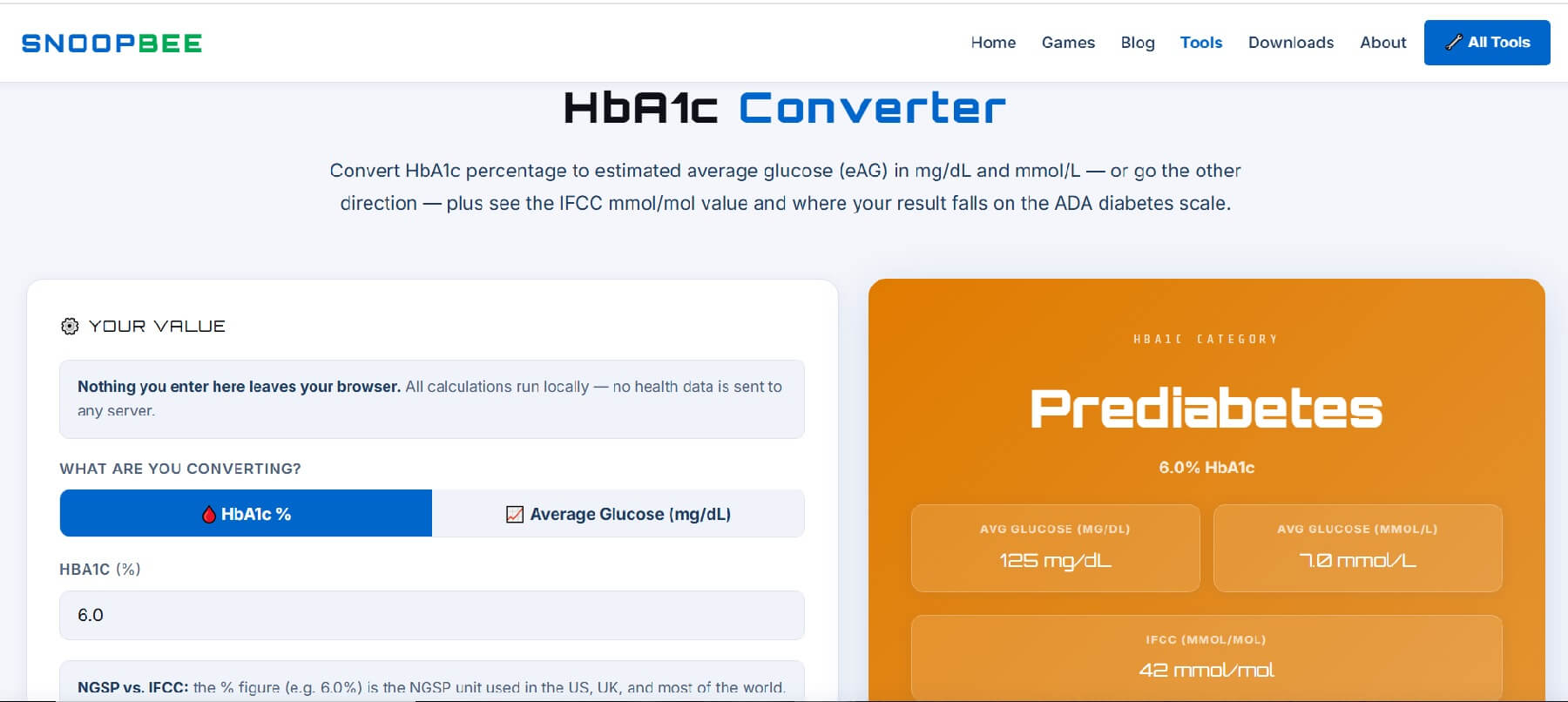
Programs that reward blood sugar control generally look for sustained, documented trends rather than a single good result — exactly the record-keeping habit the HbA1c converter above is designed to support. Translating each new lab result into eAG and logging it over time builds the same trend record these programs are ultimately designed to reward.
Common Applicant Mistakes Worth Avoiding
- Making drastic short-term changes right before a test, hoping to influence the result. Because HbA1c reflects roughly 2-3 months of average blood sugar, a crash diet in the final week has limited effect on the number and can sometimes produce misleadingly unstable readings.
- Omitting a "borderline" or older diagnosis, assuming it no longer matters. Underwriters generally have access to medical records regardless, and an old prediabetes result showing up in records without matching disclosure on the application is a disclosure issue, not a way to secure a better rate.
- Not providing a full HbA1c trend when one exists. A single recent good result looks very different from a documented multi-year trend of steady improvement, and applicants who proactively provide the fuller trend often support a more favorable underwriting review than those who let the insurer request records from scratch.
- Assuming a diagnosis makes coverage unaffordable or unobtainable. Many people with well-controlled diabetes, particularly type 2 diabetes managed through lifestyle or oral medication, still qualify for reasonably priced coverage, and it's worth applying and comparing quotes rather than assuming the worst.
Practical Steps Worth Taking
- Get tested if you have risk factors — family history, overweight, or age over 45 — since catching prediabetes early generally supports a better long-term health and insurability outlook than an undiagnosed condition surfacing later.
- If diagnosed, bring your full record to the underwriting process, including recent HbA1c trends, medication history, and any specialist notes, rather than leaving the file with only a bare diagnosis code.
- Prioritize consistent control over time, since sustained, documented stability is generally the single most influential factor in how a diabetes diagnosis gets rated.
- Disclose accurately on every application, since non-disclosure can jeopardize a claim later regardless of the underlying reason.
- Ask about re-rating if your HbA1c has meaningfully and sustainably improved since a policy was issued — many insurers allow applicants to request review once improvement is well documented.
Frequently Asked Questions
Does a diabetes diagnosis increase life insurance premiums?
Often yes, though the impact varies widely based on type, duration, control, complications, and overall health, and many people with well-controlled diabetes still qualify for standard or near-standard coverage.
Do I have to disclose a prediabetes or diabetes diagnosis on an insurance application?
Yes, in virtually every jurisdiction — applications require accurate disclosure of diagnosed medical conditions, and non-disclosure can jeopardize a future claim.
Can improving my HbA1c improve my insurance rating over time?
In many cases, yes — insurers frequently allow applicants to request re-rating once blood sugar control has been demonstrably improved and stable for a sustained period.
Does type 1 diabetes get rated the same as type 2 diabetes?
No, they're typically assessed somewhat differently, since underwriters weigh factors like age of onset, duration, and treatment complexity, which often differ systematically between the two types.
Does health insurance in my country consider my HbA1c when setting my premium?
It depends heavily on the market and plan type. Employer group plans and, in the US, individual ACA marketplace plans generally don't price based on a diabetes diagnosis, while some private supplemental health products in other regions may include pre-existing condition clauses.
Do wellness programs reward good blood sugar control?
Increasingly yes — several insurers worldwide now offer wellness programs rewarding controlled blood sugar, sometimes tracked via connected glucose monitors.
Convert Your HbA1c to Average Glucose Right Now
Open the HbA1c Converter →This article is for general educational purposes only and is not financial, legal, insurance, or medical advice. Underwriting practices, rating classes, and product availability vary by insurer, country, and change over time — always confirm current terms directly with a licensed insurance provider or broker in your jurisdiction, and consult a doctor regarding any concerns about blood sugar or a diabetes diagnosis. This article does not endorse or recommend any specific insurer or policy. Last updated: August 2026.
💬 Questions & Reader Comments
Ask a question about how HbA1c or diabetes affects insurance in your country, or share your own experience. (Max 200 words)