Why Blood Pressure Matters So Much to Underwriters
Blood pressure is one of a small handful of vital signs measured directly, in person, during most standard life insurance paramedical exams — alongside height, weight, and often a resting heart rate reading, as our companion heart-rate insurance article covers. Unlike many risk factors that rely on self-reported history, a blood pressure reading is an objective, immediate measurement taken at the time of underwriting.
The reason it carries so much underwriting weight comes down to the well-established, decades-deep body of research linking elevated blood pressure to cardiovascular disease, stroke, and kidney disease — exactly the outcomes life and health insurers are pricing risk against. As our companion educational guide on blood pressure explains, hypertension is frequently called a "silent" condition precisely because it causes no symptoms in its early stages, which is part of why a routine exam reading can surface a previously undiagnosed condition that genuinely matters for long-term health, independent of the insurance context entirely.
It's also worth understanding how blood pressure fits alongside the other vital signs and lab values a typical paramedical exam collects. Height, weight, resting heart rate, blood pressure, and often a blood or urine sample form the core data set most underwriters work from, and blood pressure is generally weighted alongside these other markers rather than considered entirely in isolation. An elevated blood pressure reading combined with an elevated BMI and unfavorable cholesterol markers, for instance, paints a meaningfully different cardiovascular risk picture than an isolated elevated reading with an otherwise strong overall profile — which is part of why underwriters describe their process as assessing a "whole picture" rather than a single threshold.
Blood Pressure on a Paramedical Exam
A standard life insurance paramedical exam typically includes at least one blood pressure reading, taken by the examiner using a standard cuff. Because a single reading can be affected by exam-day anxiety — the same white coat effect our companion guide covers in depth — many insurers allow a brief rest period before measuring, and some permit a second reading if the first comes back unexpectedly high, or accept corroborating readings from an applicant's own physician or home monitoring log.
Applicants with a known hypertension diagnosis are also generally asked to disclose it directly on the application questionnaire, along with any prescribed medication, how long it's been diagnosed, and how well it's been controlled based on recent readings — all of which typically matter more to the final rating than the single in-person exam reading alone.
How Ratings Typically Scale With Severity
While exact rating tables are proprietary to each insurer and vary by product and jurisdiction, the general underwriting logic across most major insurers scales fairly predictably with blood pressure severity and control:
| Blood Pressure Profile | General Underwriting Tendency |
|---|---|
| Normal, no diagnosis | No additional rating impact from blood pressure |
| Elevated / Stage 1, well-managed via lifestyle | Often minimal to modest impact, especially with a healthy overall risk profile |
| Stage 1–2, controlled on medication with stable readings | Moderate factor; medication adherence and stability generally weighted favorably |
| Stage 2, poorly controlled or unmedicated | More significant rating factor, particularly alongside other cardiovascular risk markers |
| History of hypertensive crisis or related complications | Substantial factor; full medical history and current control status closely reviewed |
Key takeaway: across virtually every major insurer, the direction of underwriting logic is the same — control and stability matter more than the diagnosis label alone. A well-managed Stage 2 diagnosis with years of stable, medicated readings is generally viewed more favorably than an unmedicated, untracked, borderline reading of unknown duration.
Treated vs. Untreated Hypertension
This is arguably the single most consequential distinction in blood pressure underwriting. An applicant on a stable, effective antihypertensive medication regimen, with a documented history of consistently controlled readings, is in a materially different risk position than one with an identical diagnosis and no treatment plan — and most underwriting guidelines reflect that difference explicitly and substantially.
This mirrors the same logic our companion sleep-apnea insurance article describes for CPAP compliance: it's not the diagnosis itself but the ongoing, unmanaged physiological risk that concerns underwriters, and demonstrated treatment adherence directly addresses that concern. Bringing recent readings, a medication list, and physician records to the underwriting process — rather than leaving the file with only a bare diagnosis code — is one of the more effective ways an applicant can support a better rating outcome.
Health Insurance & Pre-Existing Conditions
Health insurance underwriting for blood pressure varies more by market than life insurance does, largely because health insurance regulatory frameworks differ substantially by country. In the United States, the Affordable Care Act prohibits individual and small-group health plans from denying coverage or charging higher premiums based on pre-existing conditions like hypertension, meaning blood pressure itself doesn't drive individual health insurance pricing the way it can for life insurance. In many other markets, including private supplemental health insurance in parts of Asia and elsewhere, pre-existing condition clauses and waiting periods for hypertension-related claims are more common, making accurate disclosure at application time particularly important in those markets specifically.
Employer-sponsored group health coverage, common across the US, Canada, UK, and much of Europe, typically doesn't individually underwrite based on blood pressure at all, since group plans price risk across the entire covered population rather than assessing each member individually — worth knowing if your primary source of coverage is employment-based rather than an individually underwritten policy.
Critical illness insurance sits in a somewhat different category from general health coverage: it's typically sold as an individually underwritten supplemental product even in markets with strong public or employer-based core health coverage, and blood pressure is assessed at the point of application much like life insurance, given the product's direct link to cardiovascular event payouts.
Disability & Critical Illness Insurance
Disability insurance and critical illness insurance both weigh blood pressure somewhat differently than standard life insurance. Critical illness insurance, given its direct payout trigger on cardiovascular events like heart attack and stroke, weighs hypertension's well-documented association with those specific outcomes especially heavily. Disability insurance underwriting tends to focus more on whether a condition and its treatment meaningfully affect an applicant's capacity to work in their specific occupation, which for well-controlled hypertension is often minimal, but can factor in more significantly for poorly controlled cases with related complications.
A Worldwide Tour: Dietary Sodium, Diet & Regional Underwriting
What varies most by region for blood pressure isn't the underwriting logic itself, which is broadly consistent worldwide, but population-level dietary sodium intake, which directly shapes how common hypertension is in a given market and, over time, feeds into how insurers view regional risk pools.
United States, Canada, UK & EU
The UK has run a sustained, decades-long voluntary salt-reduction program targeting processed food manufacturers, one of the more cited public health interventions credited with modestly lowering average population sodium intake; underwriting practices in these markets otherwise follow the severity-and-control logic described earlier in this article.
India, China & Southeast Asia
Traditional diets across much of this region carry meaningfully higher average sodium intake than WHO recommendations, largely from salt-heavy staples, preserved foods, and condiments, a well-documented public health concern regional governments have targeted with awareness campaigns — a genuine contributor to the region's hypertension prevalence, separate from the general market-expansion narrative common to insurance coverage discussions.
Japan, Australia & New Zealand
Japan's traditional diet, rich in soy sauce, miso, and pickled foods, has historically carried high average sodium intake alongside sustained public health messaging around it; Australia and New Zealand's dietary patterns and underwriting practices for blood-pressure-related risk more closely resemble Western peer markets.
Wellness Programs & Home Monitoring
A number of life and health insurers worldwide now offer wellness programs that reward measurably healthy behaviors — connected fitness tracker data, gym attendance, and increasingly, blood pressure readings from connected home monitors — with premium discounts, cashback, or loyalty rewards, similar in structure to the sleep- and heart-rate-linked wellness programs our companion articles cover.
💡 Where Your Calculator Results Fit In
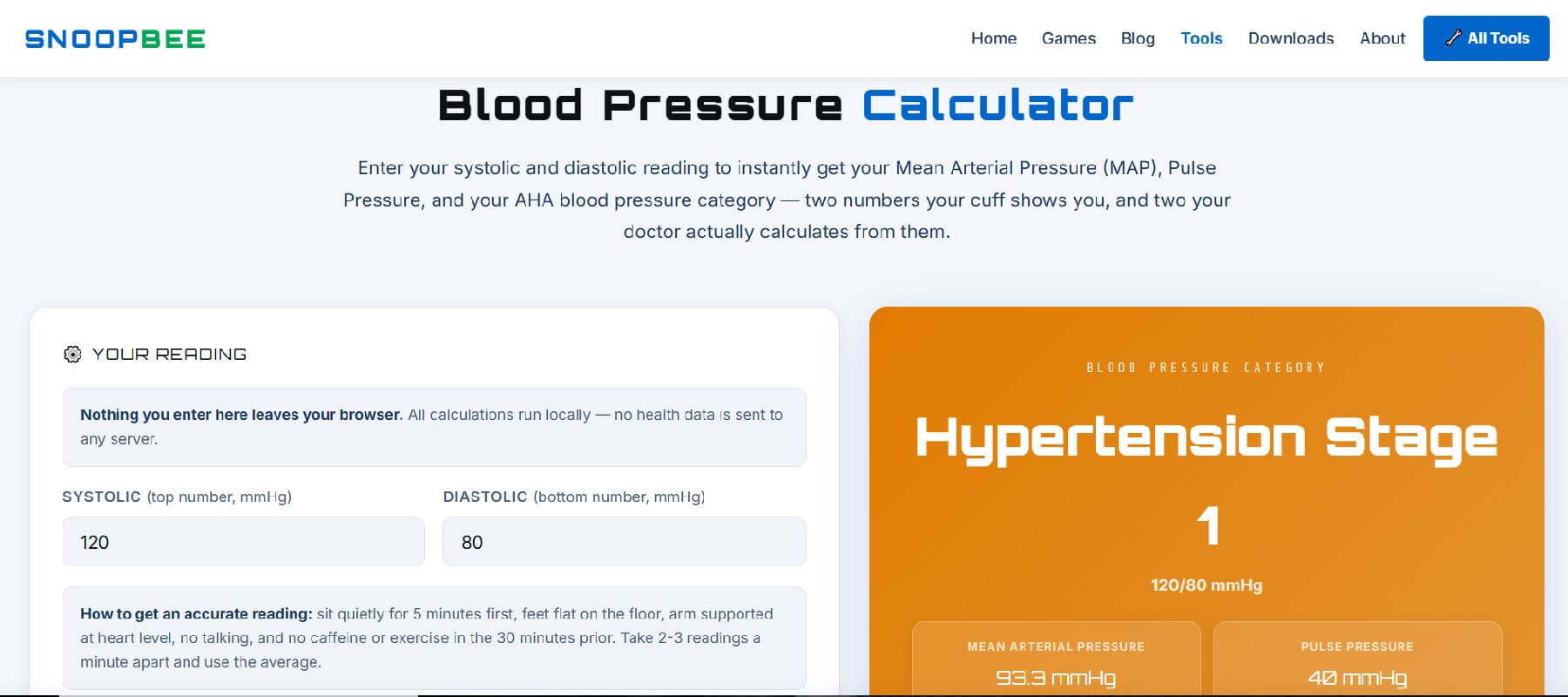
Programs that reward blood pressure control typically look for consistency over time, not a single good reading — exactly the kind of ongoing tracking habit the blood pressure calculator above is designed to support. Logging your MAP, Pulse Pressure, and AHA category regularly ahead of enrolling in such a program builds the same record-keeping habit these programs are ultimately designed to reward.
Common Applicant Mistakes Worth Avoiding
- Skipping medication right before an exam, hoping for a lower reading. This is generally counterproductive and can produce an unusually erratic or even higher reading, since abruptly stopping some blood pressure medications can cause a rebound effect.
- Failing to mention a diagnosis the applicant considers "minor" or well-controlled. Underwriters generally have access to medical records during the application process regardless, and omitting a known diagnosis is a disclosure issue, not a way to secure a better rate.
- Assuming one bad reading is final. Many applicants don't realize a retest, home-reading log, or physician records can meaningfully change an initial rating based on a single elevated exam-day number.
- Not asking about re-rating after improvement. Applicants who've genuinely brought their blood pressure under control after a policy was issued sometimes don't realize they can request a review, potentially unlocking a better rate on an existing or new policy.
Practical Steps Worth Taking
- Get an accurate baseline reading using the technique in our companion guide before any medical exam, so you know roughly where you stand and aren't caught off guard.
- If you have a diagnosis, bring your records, including recent readings and current medications, to support a fuller underwriting picture beyond a single exam-day measurement.
- Prioritize consistent treatment and control over time, since sustained, documented stability is generally the single most influential factor in how a hypertension diagnosis gets rated.
- Disclose accurately on every application, since non-disclosure can jeopardize a claim later regardless of the underlying reason.
- Ask about re-rating options if your blood pressure has meaningfully improved and stabilized since a policy was first issued — many insurers allow applicants to request review once sustained improvement is documented.
As with the other health metrics covered across our companion insurance guides, the throughline is the same: insurers are ultimately pricing risk based on the fuller, longer-term picture rather than any single number in isolation, and a consistent habit of tracking your own readings — exactly what the calculator above supports — is one of the most direct, actionable ways to build and demonstrate that fuller picture over time.
Frequently Asked Questions
Does high blood pressure increase life insurance premiums?
It can, particularly for higher-stage or poorly controlled hypertension, though well-controlled blood pressure on medication is often rated more favorably than the same diagnosis left untreated.
Do I have to disclose a hypertension diagnosis on an insurance application?
Yes, in virtually every jurisdiction — applications require accurate disclosure of diagnosed medical conditions, and non-disclosure can jeopardize a future claim.
Can controlling my blood pressure improve my insurance rating over time?
In many cases, yes. Insurers frequently allow applicants to request re-rating once blood pressure has been well-controlled and stable for a sustained period, though policies vary by insurer.
Does a single high reading during a medical exam hurt my insurance application?
Not automatically — given how common white coat hypertension is, many insurers allow a retest or consider home readings and medical records alongside a single exam-day measurement.
Does health insurance in my country consider blood pressure when setting my premium?
It depends heavily on the market and plan type. Employer group plans and, in the US, individual ACA marketplace plans generally don't price based on blood pressure, while some private supplemental health products in other regions may.
Do wellness programs reward good blood pressure?
Increasingly yes — several insurers worldwide now offer wellness programs rewarding controlled blood pressure, sometimes tracked via connected home monitors.
Track Your MAP, Pulse Pressure & AHA Category
Open the Blood Pressure Calculator →This article is for general educational purposes only and is not financial, legal, insurance, or medical advice. Underwriting practices, rating classes, and product availability vary by insurer, country, and change over time — always confirm current terms directly with a licensed insurance provider or broker in your jurisdiction, and consult a doctor regarding any blood pressure concerns. This article does not endorse or recommend any specific insurer or policy. Last updated: August 2026.
💬 Questions & Reader Comments
Ask a question about how blood pressure affects insurance in your country, or share your own experience. (Max 200 words)