Sleep Apnea: The Condition Insurers Actually Rate
Obstructive sleep apnea (OSA) is a condition where breathing repeatedly stops and starts during sleep, most often because throat muscles relax and partially or fully block the airway. It's typically diagnosed via a sleep study measuring an "apnea-hypopnea index" (AHI) — the number of breathing interruptions per hour — and classified as mild, moderate, or severe. Unlike the general 90-minute sleep cycle concepts our companion educational guide covers, OSA is the specific sleep-related diagnosis that most directly affects insurance underwriting.
As our companion guide explains, waking mid-cycle occasionally is completely normal. Sleep apnea is different in kind, not degree: it involves dozens or even hundreds of breathing interruptions per night in moderate-to-severe cases, each one briefly dropping blood oxygen levels and triggering a partial arousal, fragmenting sleep architecture far more severely than an ordinary mistimed alarm ever could. This fragmentation, combined with the repeated oxygen dips themselves, is why OSA carries well-documented associations with elevated risk for hypertension, heart disease, stroke, and type 2 diabetes — which is precisely why it draws underwriting attention that ordinary poor sleep habits do not.
| AHI (Events/Hour) | Classification | General Underwriting Relevance |
|---|---|---|
| Under 5 | Normal | No additional rating impact |
| 5–14 | Mild OSA | Often manageable rating impact, especially if treated |
| 15–29 | Moderate OSA | More significant factor; treatment compliance matters considerably |
| 30+ | Severe OSA | Substantial factor; strongly weighted toward treatment status and cardiovascular risk profile |
Important nuance: a sleep apnea diagnosis does not automatically mean an applicant is uninsurable or even necessarily rated unfavorably in every case. As with most conditions insurers assess, the complete picture — severity, treatment status, compliance, and other cardiovascular risk factors — matters far more than the diagnosis code alone.
Sleep Questions on a Paramedical Exam
Most standard life insurance paramedical exams include a health questionnaire covering diagnosed conditions, and sleep apnea, along with any other diagnosed sleep disorder, is a standard disclosure item on virtually every major insurer's application. Unlike resting heart rate or blood pressure, which are physically measured on the spot, sleep apnea status is typically self-reported and then verified against medical records if the applicant discloses a prior diagnosis or if screening questions (loud snoring, witnessed breathing pauses, excessive daytime sleepiness, high BMI, large neck circumference) suggest undiagnosed risk worth flagging for further evaluation.
This screening-based approach matters for anyone who suspects they might have undiagnosed OSA but hasn't yet been formally tested: many major risk factors for OSA overlap with factors already assessed elsewhere in a typical exam, particularly BMI and neck circumference, which is part of why an applicant with a higher BMI and reported loud snoring may be asked follow-up questions or referred for a sleep study before a final rating decision, even without a prior formal diagnosis on file.
CPAP Compliance & How It Changes Your Rating
Continuous positive airway pressure (CPAP) therapy — a machine that delivers pressurized air through a mask to keep the airway open during sleep — remains the most common and effective treatment for moderate to severe OSA. From an underwriting standpoint, demonstrated CPAP compliance (typically evidenced through device usage data, which most modern machines log automatically) is one of the more consequential factors separating a favorable rating from a less favorable one for an applicant with a known OSA diagnosis.
This matters because it directly addresses the mechanism insurers actually care about: it's not the diagnosis itself but the associated cardiovascular risk from untreated, ongoing oxygen deprivation and sleep fragmentation that concerns underwriters. An applicant with well-documented, consistent CPAP compliance is, from a risk standpoint, in a genuinely different position than one with an identical diagnosis but no treatment, and underwriting guidelines at most major insurers reflect that distinction explicitly.
Where this can go wrong: inconsistent CPAP use, or stopping treatment without informing a physician, can leave an applicant in a position where they carry the diagnosis on record without the compliance data that would otherwise support a more favorable rating — worth being aware of well before applying for coverage, not after.
Chronic Insomnia & Underwriting
Chronic insomnia — persistent difficulty falling or staying asleep, generally defined as occurring at least three nights a week for three months or more — is treated quite differently from sleep apnea in most underwriting frameworks. On its own, insomnia rarely drives a rating decision the way a moderate-to-severe OSA diagnosis can, since it lacks the same direct, well-quantified link to cardiovascular risk that repeated nocturnal oxygen desaturation carries.
Where insomnia does draw more underwriting attention is in its frequent co-occurrence with other conditions insurers do weigh more heavily — depression, anxiety, chronic pain, and certain cardiovascular risk factors are all statistically associated with chronic insomnia, and an underwriter reviewing an application is generally assessing the complete clinical picture rather than insomnia in isolation. A standalone insomnia diagnosis, well-managed and without significant associated conditions, is typically a comparatively minor factor in most underwriting frameworks.
Shift Work, Occupation & Underwriting
Occupation is a standard rating factor across virtually all forms of insurance, and shift work — particularly rotating or overnight shifts that disrupt normal circadian rhythm and sleep cycle regularity, as our companion educational guide explains in more depth — is a genuine, well-documented occupational health consideration. Long-term shift work has research associations with elevated cardiovascular and metabolic risk, largely attributed to the chronic circadian disruption involved rather than any single night's sleep loss.
In practice, this rarely shows up as a distinct, separately priced "shift work surcharge" on most standard life insurance products, since it's difficult to isolate from the broader occupation-based rating categories insurers already use. It's more likely to surface indirectly, through its downstream effects on cardiometabolic markers like blood pressure or weight, which are directly measured and rated. It's also more directly relevant to occupation-specific disability and income-protection underwriting, where an insurer may weigh the practical realities of a shift-work role, including any documented sleep-related health conditions, when assessing that occupation's overall risk profile.
Disability & Critical Illness Insurance
Disability insurance, which pays a benefit if illness or injury prevents an applicant from working, and critical illness insurance, which pays a lump sum on diagnosis of conditions like heart attack or stroke, both weigh sleep-related conditions somewhat differently than standard life insurance does. Severe, poorly controlled OSA can factor into disability underwriting given its association with daytime fatigue and reduced cognitive function, both practically relevant to certain occupations. Critical illness insurance, given its direct focus on cardiovascular events, weighs OSA's documented cardiovascular risk association more heavily than it weighs insomnia on its own.
A Worldwide Tour: Shift Work, Rest Regulations & Underwriting
What varies most by region for sleep-related underwriting isn't the OSA/CPAP logic itself, which is fairly consistent worldwide, but how heavily each economy relies on shift work and how strictly it regulates mandatory rest periods for safety-critical occupations — both of which feed directly into disability and occupational underwriting.
United States, Canada, UK & EU
Aviation and commercial trucking in these markets operate under strict, legally mandated hours-of-service and rest-period rules (FAA duty-time limits, EU driving-time regulations), and disability insurers underwriting these occupations often factor in documented compliance with those rest requirements alongside any personal sleep-disorder history.
India, China & Southeast Asia
Rapidly growing shift-work sectors — manufacturing, logistics, and BPO/call-center operations running overnight hours to serve Western time zones — mean a larger and growing share of the working population in this region faces chronic circadian disruption, an occupational health consideration insurers in these expanding private disability markets are increasingly factoring in alongside traditional diagnosis-based underwriting.
Japan, Australia & New Zealand
Japan's long-hours work culture has prompted sustained public health attention to overwork and sleep deprivation, which occasionally surfaces in employer-sponsored wellness messaging; Australia and New Zealand's occupational health and safety frameworks include specific fatigue-management regulations for transport and mining workers that similarly intersect with disability underwriting for those occupations.
Wearables, Wellness Programs & Sleep Tracking
A growing number of life and health insurers worldwide now offer wellness programs that connect to fitness trackers and smartwatches, using sleep duration and consistency data — rather than a single point-in-time exam — to reward healthy sleep habits with premium discounts, cashback, or loyalty rewards, similar in structure to the cardiovascular-fitness wellness programs our companion heart-rate insurance article covers.
This continuous-data approach captures something a one-time medical exam cannot: genuine longer-term consistency. A single night's sleep, potentially affected by travel, stress, or an unusual schedule, tells an underwriter comparatively little; weeks or months of tracked sleep duration and regularity reveal a real pattern. As with any wearable-linked program, participation is generally voluntary and involves sharing an ongoing stream of personal health data with the insurer — worth weighing directly against the potential savings, and worth reviewing the specific data-sharing terms before enrolling.
💡 Where Your Calculator Results Fit In
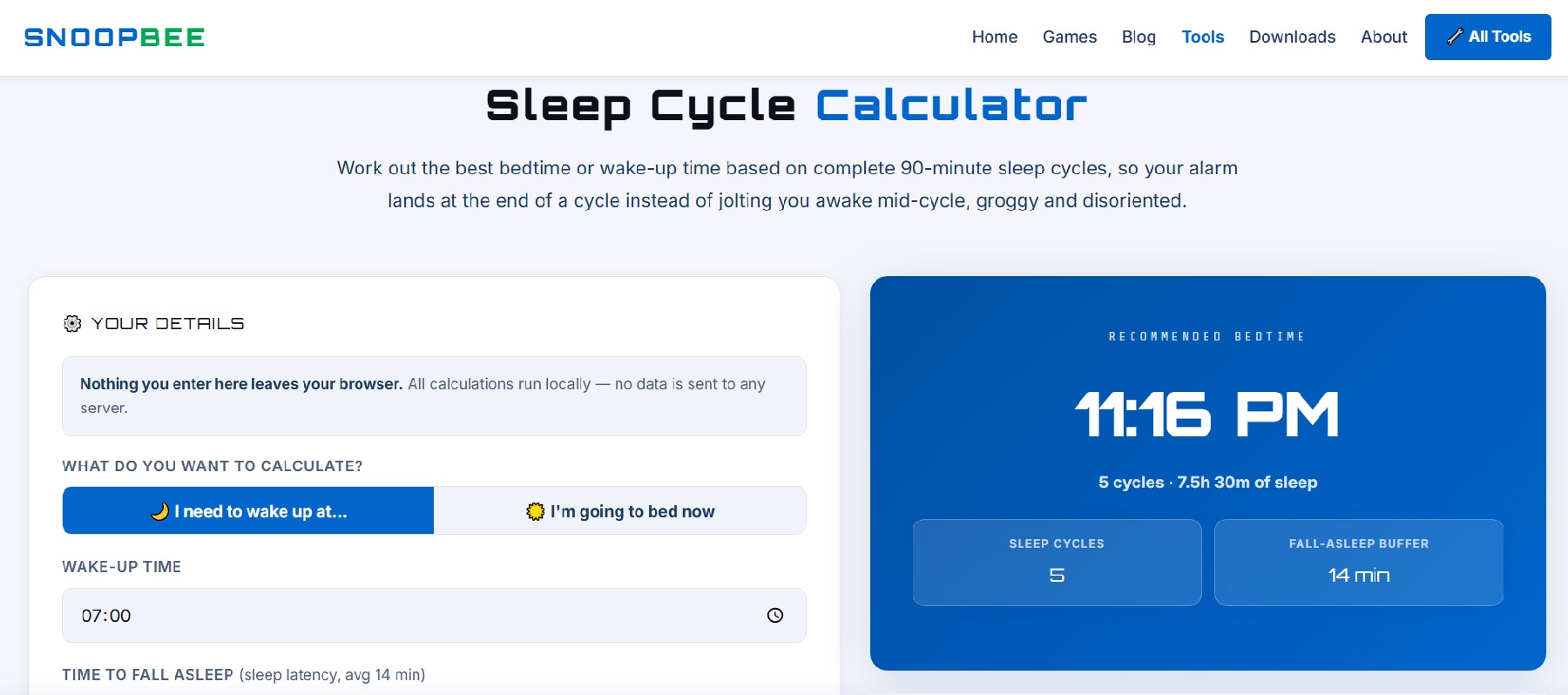
Many of these wellness programs specifically reward consistent sleep duration within the recommended range, alongside regularity of bedtime and wake-up time — exactly the kind of routine the sleep cycle calculator above is designed to help you build. Understanding your own optimal, cycle-aligned bedtime and wake-up window ahead of enrolling in such a program means working toward the same consistency metrics these programs actually track and reward.
Practical Steps Worth Taking
- If you snore loudly, wake gasping, or feel excessively tired despite adequate time in bed, discuss a sleep study with a doctor — identifying and treating OSA early is generally better for both your health and your future insurability than an undiagnosed condition surfacing at exam time.
- Disclose any known sleep disorder diagnosis accurately on insurance applications, since non-disclosure can jeopardize a claim later regardless of the underlying reason.
- If you use CPAP therapy, maintain and document your compliance, since usage data is often the single most consequential factor in how a prior OSA diagnosis gets rated.
- Ask whether your insurer's wellness program rewards sleep consistency data, particularly if you already track your sleep with a wearable device.
- Consider the full risk picture together — sleep quality, weight, blood pressure, and cardiovascular fitness — since insurers weigh the combination rather than any single measurement alone.
One final point worth carrying forward from this article: an OSA diagnosis and its severity aren't things a person can meaningfully influence overnight simply by wanting to. What genuinely is within an individual's control, and what connects most directly back to the calculator on this page, is the underlying sleep habit: a consistent, cycle-aligned bedtime and wake-up window is one of the best-supported, most direct paths toward the kind of regular, adequate sleep that research consistently links to better long-term cardiovascular and metabolic outcomes — the same outcomes every sleep-related condition discussed in this article is ultimately connected to.
Frequently Asked Questions
Does sleep apnea affect life insurance premiums?
Yes — particularly moderate to severe untreated OSA, given its cardiovascular risk association, though well-treated, compliant CPAP users are often rated more favorably than untreated applicants.
Do I have to disclose a sleep apnea diagnosis on an insurance application?
Yes, in virtually every jurisdiction — applications require accurate disclosure of diagnosed medical conditions, and non-disclosure can jeopardize a future claim.
Does chronic insomnia affect insurance underwriting?
On its own, rarely a primary factor — but it's sometimes assessed alongside associated conditions like depression, anxiety, or cardiovascular risk factors it's statistically linked with.
Can a CPAP machine improve my insurance rating?
Often, yes — demonstrated compliance is commonly viewed more favorably than an untreated diagnosis, since it shows the associated cardiovascular risk is being actively managed.
Do wearables that track sleep connect to insurance wellness programs?
Increasingly yes — a number of insurers worldwide now offer wellness programs rewarding consistent sleep duration and quality data from connected devices.
Build a Consistent, Cycle-Aligned Sleep Routine
Open the Sleep Cycle Calculator →This article is for general educational purposes only and is not financial, legal, insurance, or medical advice. Underwriting practices, rating classes, and product availability vary by insurer, country, and change over time — always confirm current terms directly with a licensed insurance provider or broker in your jurisdiction, and consult a doctor regarding any sleep symptoms or concerns about a possible sleep disorder. This article does not endorse or recommend any specific insurer or policy. Last updated: August 2026.
💬 Questions & Reader Comments
Ask a question about how sleep affects insurance in your country, or share your own experience. (Max 200 words)