Resting Heart Rate in a Paramedical Exam
Resting heart rate is a standard, quick measurement recorded during most life insurance paramedical exams — but unlike blood pressure or cholesterol, it typically functions as a supporting data point rather than a primary standalone rating factor, unless it falls notably outside the normal range.
As our companion educational guide explains, resting heart rate is one of the simplest, most accessible indicators of cardiovascular fitness available — a lower resting heart rate generally reflects a more efficient, well-conditioned heart. Underwriters are aware of this same relationship, but resting heart rate alone is a comparatively weak standalone predictor of mortality risk compared to blood pressure, cholesterol, or blood sugar, which is why it usually plays a supporting role in the overall risk picture rather than driving a rating-class decision on its own.
It's worth understanding why this ranking exists among cardiovascular risk factors, since it isn't arbitrary. Decades of large-scale population health studies — the same kind of long-term actuarial data discussed throughout our companion insurance articles on BMI and waist ratio underwriting — have consistently found that blood pressure and cholesterol carry a stronger, more direct statistical relationship with future cardiovascular events than resting heart rate does in isolation. This doesn't mean resting heart rate is irrelevant; a genuinely elevated reading still adds useful information to an overall risk assessment. It simply means that, of the several cardiovascular data points collected during a typical exam, resting heart rate tends to carry comparatively less standalone predictive weight than the other markers it's assessed alongside.
When resting heart rate does draw more attention: a notably elevated resting heart rate (persistently above roughly 100 bpm, a condition called tachycardia) or a notably irregular rhythm detected during the reading can prompt further evaluation, since both can signal an underlying cardiovascular or thyroid condition worth investigating before finalizing an underwriting decision.
The ECG: What Insurers Are Really Looking For
For larger life insurance policies, particularly for older applicants, an ECG (electrocardiogram) is commonly required alongside the paramedical exam. Unlike a simple pulse count, an ECG records the heart's actual electrical activity in detail, allowing a physician or underwriter to identify a range of structural and rhythm abnormalities that a resting heart rate reading alone cannot reveal.
| ECG Finding | General Underwriting Relevance |
|---|---|
| Normal sinus rhythm | Favorable — no additional rating impact from this test |
| Atrial fibrillation (AFib) | Significant — discussed in detail below |
| Evidence of prior heart attack | Significant — typically requires further cardiac evaluation |
| Minor, non-specific abnormalities | Often requires follow-up testing before a final rating decision |
Atrial Fibrillation & Other Rhythm Findings
Atrial fibrillation (AFib) — an irregular, often rapid heart rhythm affecting the upper chambers of the heart — is one of the most common rhythm abnormalities detected during insurance ECGs, and is a significant factor in life and critical illness insurance underwriting given its well-established association with elevated stroke risk. The specific underwriting impact varies considerably based on AFib type (occasional/paroxysmal versus persistent), how well it's controlled with treatment, and the presence of other cardiovascular risk factors.
This is an important point of nuance: a diagnosis of AFib does not automatically mean an applicant is uninsurable, or even necessarily rated unfavorably in every case — well-controlled, treated AFib with no other significant risk factors is generally viewed quite differently in underwriting than untreated or poorly controlled AFib alongside other cardiovascular risk factors. As with every biometric factor discussed throughout our companion insurance articles, insurers assess the complete clinical picture rather than applying a single automatic rule to any diagnosis in isolation.
Beyond AFib, ECGs occasionally reveal other findings worth understanding briefly, since they illustrate the range of what this single test can uncover. Evidence of a prior, previously undiagnosed heart attack — sometimes found incidentally on a routine ECG in someone with no memory of significant symptoms, a phenomenon sometimes called a "silent" myocardial infarction — is a notable and relatively common finding in this context, and typically prompts further cardiac evaluation before an underwriting decision is finalized. Various other minor, non-specific abnormalities can also appear, most of which require simple follow-up testing to clarify their significance rather than representing a serious finding in themselves — which is exactly why an unexpected ECG follow-up request from an insurer, while understandably unsettling to receive, is often ultimately a precautionary step rather than a sign of a confirmed serious problem.
Cardiorespiratory Fitness as a Broader Risk Signal
Beyond any single measurement, broader cardiorespiratory fitness — the kind heart rate zone training, discussed in our companion educational guide, is specifically designed to build — has an extensive, well-established research base linking higher fitness levels to lower long-term all-cause and cardiovascular mortality risk, largely independent of other factors like weight. This research base is part of why fitness and activity level, even though harder to measure directly than a single blood pressure reading, increasingly factors into insurer wellness programs, covered in more detail below.
One of the more striking findings from this body of research is that cardiorespiratory fitness appears to meaningfully modify cardiovascular risk even among individuals who would otherwise be classified in a higher-risk weight category by BMI alone — a pattern sometimes summarized in fitness and public health research as "fit but fat" outperforming "unfit but thin" on several cardiovascular outcome measures. This doesn't mean fitness eliminates the relevance of other risk factors covered throughout our companion insurance articles, but it does help explain why some insurers have begun exploring ways to incorporate a fitness signal — most practically captured today through wearable-linked wellness programs — as a complement to, rather than simply a restatement of, the traditional biometric measurements like BMI and waist circumference.
Critical Illness Insurance & Cardiac Risk
Critical illness insurance, which pays a lump sum specifically on diagnosis of conditions like heart attack or stroke, naturally weighs cardiac risk factors — including ECG findings, resting heart rate abnormalities, and rhythm conditions like AFib — especially heavily, since these are among the most direct predictors of the exact conditions the policy is designed to cover.
A Worldwide Tour: How National Fitness Testing Standards Differ
Beyond underwriting practices themselves, a genuinely specific regional pattern worth knowing sits one step upstream: countries structure their own national physical fitness testing programs — the institutional context in which resting and recovery heart rate measurement became a routine, population-scale practice in the first place — quite differently from one another.
The United States & United Kingdom: Step Tests and Bleep Tests
US military and school fitness assessment has long incorporated heart-rate-based components such as step tests, while UK military and sports institutions popularized the multi-stage fitness test (widely known as the "bleep test"), which uses heart rate recovery as an implicit fitness marker across a running-based protocol rather than a resting measurement alone.
Japan: A Long-Running National Fitness Survey
Japan has conducted a nationwide physical fitness and motor ability survey since the 1960s, tracking population fitness trends including cardiovascular measures across age groups over decades — one of the longest-running national fitness data collection efforts in the world, and part of the same public health infrastructure discussed in our companion guide on hydration and Japan's metabolic syndrome screening program.
China: A Large-Scale Standardized Testing Mandate
China's National Student Physical Health Standard mandates standardized fitness testing, including cardiovascular components, across its school-age population at a scale few other countries attempt — reflecting a deliberate national policy emphasis on population-level fitness measurement that differs structurally from the more voluntary, insurer- or gym-driven heart rate tracking common in Western markets.
Why This Institutional History Matters
These differing national testing traditions shape which heart-rate-related data a given population is most accustomed to having measured routinely — which, in turn, shapes how culturally familiar and readily available heart-rate-based health data is in each market, independent of whatever a specific insurer's own underwriting guidelines require.
Wearables, Wellness Programs & Continuous Heart Data
A meaningful and growing number of life and health insurers worldwide now offer wellness programs that connect directly to fitness trackers and smartwatches, using continuous heart rate and activity data — rather than a single point-in-time exam reading — to reward sustained cardiovascular fitness with premium discounts, cashback, or loyalty rewards.
This shift toward continuous data represents a genuinely different underwriting paradigm from the traditional one-time paramedical exam, and it's worth understanding both the opportunity and the tradeoffs it involves. A single ECG or resting heart rate reading captures one moment in time, potentially affected by exam-day nerves or an unusual night's sleep; continuous wearable data, by contrast, can reveal genuine longer-term patterns and trends that a single snapshot simply cannot. On the other hand, participation in these programs is generally voluntary and involves sharing an ongoing stream of personal health data with the insurer, which is a meaningfully different privacy consideration than a one-time exam — worth weighing directly against the potential premium savings before enrolling, and worth reviewing the specific data-sharing terms of any program before opting in.
💡 Where Your Calculator Results Fit In
Many of these wellness programs specifically reward time spent in moderate-to-vigorous heart rate zones — the exact same zones this calculator generates — as a proxy for genuine cardiovascular exercise, distinct from simple step counts. Understanding your own zones ahead of enrolling in such a program means training with a clearer sense of how your effort maps to the metrics these programs actually track and reward.
Practical Steps Worth Taking
- Track your resting heart rate trend over time, not as an underwriting hack, but because a declining trend is a genuinely meaningful signal of improving cardiovascular fitness worth knowing about for its own sake.
- Disclose any known heart rhythm condition accurately on insurance applications, since non-disclosure can jeopardize a claim later regardless of the underlying reason.
- Ask whether your insurer's wellness program rewards heart-rate-zone-based activity, particularly if you already train with a heart rate monitor.
- If an ECG reveals a rhythm finding, seek appropriate cardiac follow-up before a policy decision, since well-managed conditions are often underwritten more favorably than untreated ones.
- Consider the full cardiovascular risk picture together — resting heart rate, blood pressure, cholesterol, and any ECG findings — since insurers weigh the combination rather than any single measurement alone.
One final point worth carrying forward from this article: none of the specific tests and findings discussed here — resting heart rate, ECG results, AFib status — are things a person can meaningfully influence in the short term simply by wanting to. What genuinely is within an individual's control, and what connects most directly back to this calculator, is the underlying training habit: consistent, structured cardiovascular exercise, tracked and paced using well-understood heart rate zones, is one of the best-supported, most direct paths toward the kind of cardiorespiratory fitness that research consistently links to better long-term cardiovascular outcomes — the same outcomes every measurement discussed in this article is ultimately trying to predict.
Frequently Asked Questions
Does resting heart rate directly affect life insurance premiums?
It's sometimes recorded but typically a secondary or supporting data point rather than a primary rating factor, unless notably abnormal.
Is an ECG required for life insurance?
Commonly required for larger policies, particularly for older applicants, and can reveal heart rhythm abnormalities directly relevant to underwriting.
Does atrial fibrillation affect insurance underwriting?
Yes — it's a significant factor given its association with elevated stroke risk, with the specific impact depending on type, treatment, and overall cardiovascular health.
Do wearable devices connect to insurance wellness programs?
Yes, increasingly — a number of insurers worldwide now offer wellness programs connecting to fitness trackers, rewarding sustained cardiovascular activity.
Can improving cardiovascular fitness lower my insurance premium?
Indirectly yes, particularly through improvements reflected in blood pressure, resting heart rate trends, or a more favorable overall risk profile at a future review.
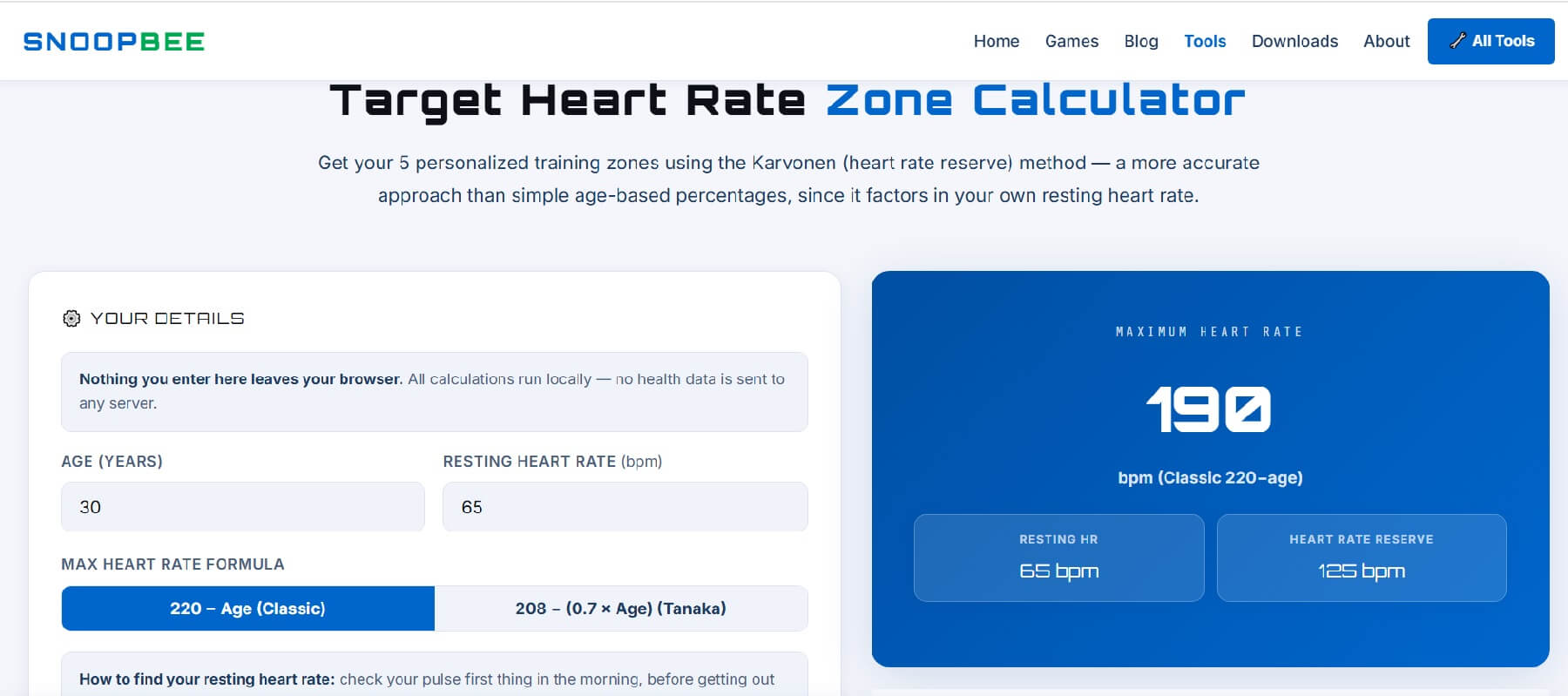
Check Your Heart Rate Zones Before Your Next Health Screening
Open the Heart Rate Zone Calculator →This article is for general educational purposes only and is not financial, legal, insurance, or medical advice. Underwriting practices, rating classes, and product availability vary by insurer, country, and change over time — always confirm current terms directly with a licensed insurance provider or broker in your jurisdiction, and consult a doctor regarding any heart rhythm findings, symptoms, or concerns about your cardiovascular health. This article does not endorse or recommend any specific insurer or policy. Last updated: August 2026.
💬 Questions & Reader Comments
Ask a question about how heart rate or cardiovascular fitness affects insurance in your country, or share your own experience. (Max 200 words)