Why Hydration Itself Isn't Underwritten Directly
Unlike BMI, waist circumference, or blood pressure — each covered in our companion insurance articles — daily water intake is not a data point any insurer directly measures or asks about on a standard application or paramedical exam. There's no practical way to verify it, and no standardized clinical measurement for "how much water did this person drink yesterday."
This stands in genuine contrast to nearly every other health metric this site's calculators cover, each of which connects to insurance underwriting in a more direct, measurable way — a doctor or nurse can record height and weight in seconds, or take a blood pressure reading in under a minute. Fluid intake has no equivalent quick, objective measurement point; it would require days of self-reported logging to even approximate, and self-reported dietary and fluid data is notoriously unreliable in research settings, let alone a one-time underwriting exam. This practical measurement barrier, as much as anything else, explains why hydration sits apart from the other biometric factors covered in our companion insurance guides.
This is a genuinely important distinction to start with, because it would be inaccurate to suggest hydration habits show up on an insurance form the way weight or blood pressure do. What this article actually explores is the more realistic, indirect relationship: chronic hydration patterns, sustained over months and years, contribute to measurable downstream health markers — kidney function chief among them — that absolutely are standard, well-established parts of life and health insurance underwriting.
It's worth being explicit about this distinction upfront because it's easy to overstate the connection between hydration and insurance in a way that isn't quite accurate. This article isn't suggesting that drinking more water will directly lower your life insurance premium, or that an insurer is somehow tracking your daily fluid intake. The genuine, evidence-based connection runs through a longer chain: consistent hydration habits are one contributing factor, among several, to long-term kidney health, and kidney health markers are a standard, well-established part of how insurers assess risk. Understanding that full chain accurately is more useful than either overstating or dismissing the connection entirely.
Kidney Function: The Real Underwriting Link
Kidney function is a standard component of the blood and urine testing conducted during a paramedical exam for larger life insurance policies, typically assessed through eGFR (estimated Glomerular Filtration Rate) and serum creatinine — markers that reflect how efficiently the kidneys are filtering waste from the blood.
| eGFR Range | General Interpretation |
|---|---|
| 90+ mL/min/1.73m² | Normal kidney function |
| 60–89 | Mildly reduced function |
| 30–59 | Moderately reduced function |
| Below 30 | Severely reduced function — significant underwriting relevance |
Chronic, long-term inadequate hydration is one of several contributing lifestyle factors researchers have studied in relation to long-term kidney health, alongside more dominant risk factors like diabetes, high blood pressure, and genetics — kidney health is multifactorial, and hydration is a contributing piece of that broader picture rather than the primary driver for most people. Insurers underwriting based on eGFR and creatinine are responding to the full clinical picture these tests reveal, not attempting to infer someone's drinking habits specifically.
Chronic Kidney Disease (CKD) and underwriting: a diagnosis of CKD, particularly at more advanced stages, is a significant factor in life and critical illness insurance underwriting, given its association with elevated long-term cardiovascular and mortality risk. This is a genuine, well-established underwriting category — distinct from, and considerably more significant than, ordinary day-to-day hydration habits in a healthy individual.
CKD underwriting typically follows a staged approach, broadly mirroring the clinical staging system doctors use, where early-stage CKD (stages 1-2, generally corresponding to the "normal" or "mildly reduced" eGFR ranges in the table above) may have a comparatively modest impact on rating class, particularly if well-managed and stable, while more advanced stages (3-5) typically carry more significant underwriting implications, reflecting the clinically established relationship between declining kidney function and elevated long-term health risk. As with the other biometric factors covered throughout our companion insurance articles, insurers generally assess the complete clinical picture — how long a condition has been stable, what's causing it, and what other risk factors are present — rather than applying a single rigid rule based on one lab value in isolation.
Kidney Stones & Chronic Low Fluid Intake
Insufficient fluid intake is one of the most well-established, directly modifiable risk factors for kidney stone formation — concentrated urine allows minerals to crystallize more readily, and adequate hydration is a first-line recommendation for stone prevention in clinical guidelines worldwide.
💡 Where Your Calculator Results Fit In
A documented history of kidney stones is a standard disclosure item on most life and health insurance applications, and can affect underwriting, particularly for recurrent stones or an underlying metabolic condition. Since chronic low fluid intake is one of the few genuinely modifiable risk factors for stone formation, consistently meeting a personalized hydration target — like the one this calculator provides — is a reasonable, evidence-based piece of a broader kidney health strategy, alongside diet and any specific guidance from a doctor.
Heat-Related Illness & Travel Insurance
Heat exhaustion and heatstroke — both directly linked to inadequate hydration during heat exposure — are recognized medical conditions that can result in health insurance and travel insurance claims, particularly relevant for travelers visiting hot climates from cooler home countries, or for anyone engaging in outdoor physical activity during extreme heat.
Heatstroke specifically is a medical emergency, distinct from milder heat exhaustion, occurring when the body's core temperature rises to dangerous levels and normal cooling mechanisms fail — it requires immediate medical treatment and carries genuine mortality risk if not addressed promptly. Travel insurance policies generally cover emergency medical treatment for heatstroke and heat exhaustion the same way they'd cover other acute medical emergencies abroad, but the practical prevention — adequate hydration, gradual heat acclimatization, and sensible activity timing during the hottest parts of the day — remains considerably more valuable than relying on insurance coverage after the fact.
A practical travel insurance note: travelers heading to hot, humid destinations — a common pattern for visitors to South and Southeast Asia, the Middle East, and similar climates — genuinely benefit from understanding heat acclimatization and hydration needs before departure, both for basic health reasons and because documented heat-related medical incidents can factor into future travel insurance underwriting or claims history in some circumstances.
Occupational Heat Exposure & Workers' Insurance
For outdoor and physically demanding occupations — construction, agriculture, and delivery work among them — heat-related illness is a recognized occupational health and safety concern in many countries, with growing regulatory attention in recent years given rising average temperatures in several regions. Workers' compensation and occupational health insurance frameworks in a number of countries increasingly incorporate heat-safety protocols, including mandated hydration breaks, as part of broader workplace risk management, particularly in South Asia, the Middle East, and other regions with sustained high-heat working conditions.
This regulatory trend is worth understanding in a bit more depth, since it's a genuinely active and evolving area of occupational health policy in several major economies. A number of jurisdictions have introduced, or are actively developing, formal heat-safety standards mandating scheduled water breaks, shaded rest areas, and modified work-rest cycles once ambient temperature or heat-index thresholds are crossed, applying specifically to outdoor and high-heat indoor occupations. For workers and employers alike, these frameworks connect fairly directly to insurance in a practical sense: workplace safety compliance, including documented heat-safety protocols, is frequently a factor employers' liability and workers' compensation insurers consider when assessing workplace risk and setting premiums for businesses operating in this space.
A Worldwide Tour: Why Official Hydration Targets Themselves Differ by Region
Most of the regional variation covered in our companion insurance articles concerns market structure — which countries underwrite a given metric. Hydration is a little different: the actual government-recommended intake targets diverge by region under real, published national and regional health-authority guidance, which is worth understanding before assuming any single number is a universal medical standard.
Europe's EFSA Guidance vs. the US National Academies
The European Food Safety Authority's 2010 adequate intake guidance recommends roughly 2.0 liters of total water per day for adult women and 2.5 liters for adult men, from all sources combined. The US National Academies of Sciences, Engineering, and Medicine (the body referenced in our companion educational guide) recommends a notably higher roughly 2.7 liters for women and 3.7 liters for men. Both are legitimate, evidence-reviewed national and regional guidelines — they simply weighed the same underlying research and reached different adequate-intake conclusions, which is a genuinely useful thing to know if you've ever compared hydration advice from different countries and wondered why the numbers don't match.
Climate as the More Practical Regional Variable
Beyond differing official guidelines, our companion educational guide's climate-based adjustment reflects a more practically important regional reality: countries spanning consistently hot, humid climates for much of the year — including large parts of India, Southeast Asia, and similar tropical and subtropical regions — generally warrant a materially higher realistic daily target than a national baseline figure calculated for a temperate climate would suggest, regardless of which government guideline a reader defaults to.
Why This Matters for How You Read This Calculator's Results
Because there is no single, universally agreed international hydration standard — only several legitimate national and regional ones layered with individual climate and activity adjustments — this calculator's output is best read as a reasonable, personalized estimate grounded in one specific well-established formula, rather than an attempt to reconcile every government guideline worldwide into one number.
Wellness Programs & Hydration Tracking
Some insurer wellness programs have begun incorporating hydration tracking through connected apps or wearable devices, alongside more established step-count and sleep tracking, offering rewards or discounts for consistent healthy hydration habits — though this remains less universally offered than exercise or weight-based wellness incentives across most markets today.
Putting This Article in Context With Our Other Insurance Guides
If you've read our companion articles on how BMI, body fat, waist ratio, or ideal body weight affect insurance, you'll notice this article follows a somewhat different shape than those — and that difference is deliberate and worth naming directly. BMI, waist circumference, and bodyweight are measurements insurers actually record during a paramedical exam and weigh directly in a build chart or rating decision. Hydration is not that kind of measurement — there's no equivalent "hydration chart" in any insurer's underwriting manual.
What connects this article to those companion pieces is a different, but equally real, kind of relationship: a genuinely modifiable daily habit that contributes, over the long run, to the kidney health markers that do get measured directly. This is a useful pattern to recognize more broadly across health and insurance topics — not every health habit worth building shows up as a direct line-item on an insurance form, but many contribute meaningfully to the biometric markers that do, which is exactly why understanding the fuller picture, rather than just the measurements insurers record, gives a more complete and genuinely useful understanding of how everyday health habits connect to long-term insurability and premium costs.
Practical Steps Worth Taking
- Treat hydration as one piece of a broader kidney health strategy, alongside blood pressure and blood sugar management, rather than viewing any single factor in isolation.
- Disclose any history of kidney stones or kidney conditions accurately on insurance applications — inaccurate disclosure can jeopardize a claim later, regardless of the underlying reason for non-disclosure.
- If traveling to a hot climate, prepare for heat acclimatization and hydration needs in advance, both for health reasons and general travel insurance preparedness.
- Ask whether your insurer's wellness program includes hydration tracking if this is a habit you already maintain consistently, since it may offer an underused discount opportunity.
- Discuss any kidney function test results directly with a doctor, since eGFR and creatinine values require clinical context a general calculator or article cannot provide.
Frequently Asked Questions
Does daily water intake directly affect life insurance premiums?
Not directly — insurers don't measure daily water intake. However, downstream markers linked to chronic hydration habits, like kidney function tests, are standard underwriting inputs.
Is chronic kidney disease relevant to insurance underwriting?
Yes — kidney function, assessed via eGFR and creatinine, is a standard underwriting input given CKD's association with elevated long-term health risk.
Do wellness programs reward hydration habits?
Some programs now incorporate hydration tracking via connected apps or wearables, though it's less common than exercise or weight-based incentives.
Can heat-related illness affect travel or health insurance claims?
Yes — heat exhaustion and heatstroke are recognized conditions that can result in claims, and repeated incidents may be relevant to future underwriting in some circumstances.
Are kidney stones relevant to insurance applications?
A history of kidney stones is typically disclosed on applications and can affect underwriting, particularly for recurrent stones or an underlying metabolic condition driving the stone formation.
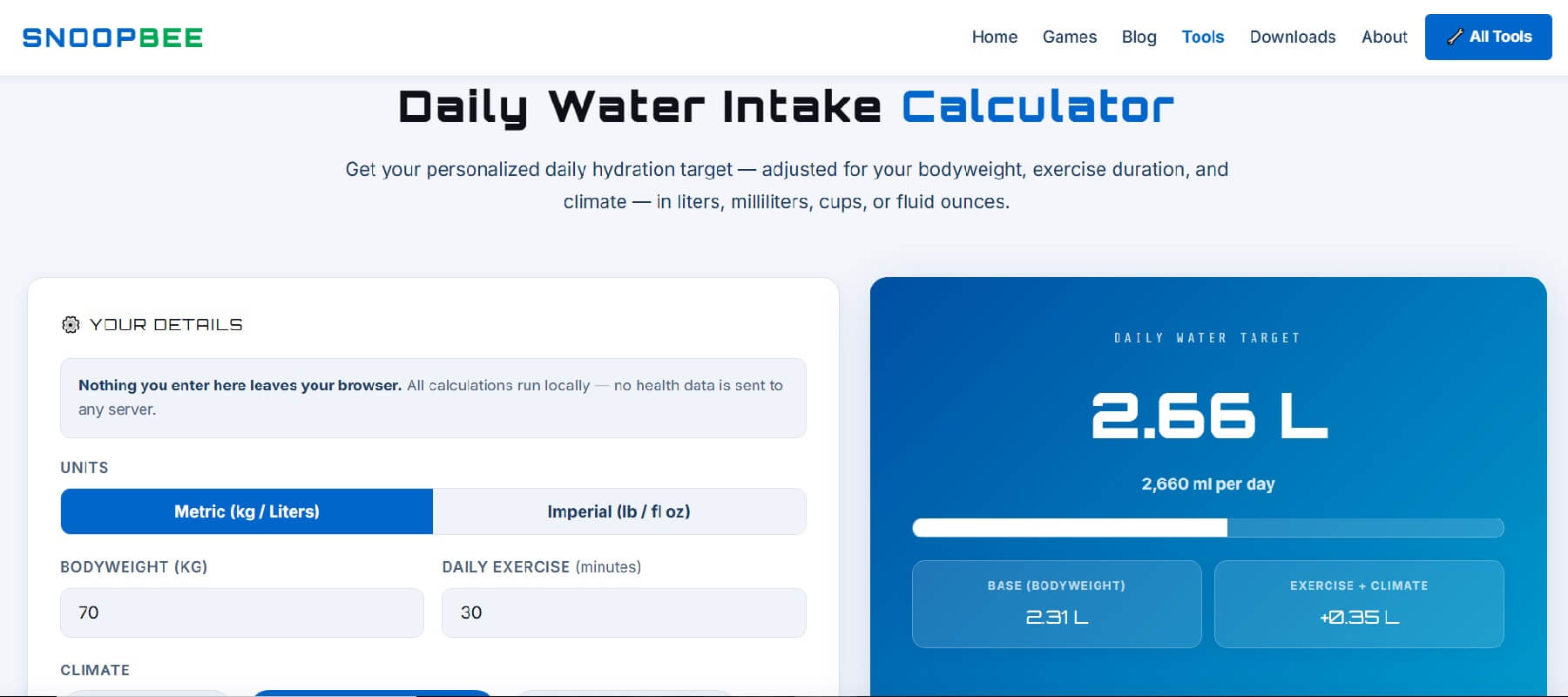
Set Your Personalized Hydration Target Today
Open the Water Intake Calculator →This article is for general educational purposes only and is not financial, legal, insurance, or medical advice. Underwriting practices, rating classes, and product availability vary by insurer, country, and change over time — always confirm current terms directly with a licensed insurance provider or broker in your jurisdiction, and consult a doctor regarding any kidney function test results or symptoms of heat-related illness. This article does not endorse or recommend any specific insurer or policy. Last updated: August 2026.
💬 Questions & Reader Comments
Ask a question about hydration, kidney health, or how it connects to insurance in your country, or share your own experience. (Max 200 words)